 Save
Save My kitchen counter was dusted white with flour, my hands sticky with egg dough, and I was already second-guessing the whole thing. Making ravioli from scratch felt like something only nonnas with decades of experience should attempt. But then I pressed that first little pillow of pasta closed, the ricotta and spinach tucked safely inside, and something clicked. It wasn't just about perfection, it was about the rhythm, the quiet satisfaction of building something with your own two hands.
I made these ravioli the first time for a small dinner party, mostly to show off if I'm being honest. My friends walked into the kitchen just as I was sealing the last batch, and one of them grabbed a raw ravioli edge scrap and ate it right there. We all laughed, but that little moment of everyone gathered around the counter, stealing bites and asking questions, turned the whole evening into something warmer than I'd planned. The meal became secondary to the process itself.
Ingredients
- All-purpose flour: The backbone of your dough, it gives structure without being too heavy, and a little extra for dusting saves you from sticky disasters.
- Large eggs: They bring richness and help bind the dough, choose the freshest you can find because it really does make the pasta more golden and silky.
- Ricotta cheese: Look for whole milk ricotta if possible, the creaminess is worth it and avoids that grainy texture some part-skim versions have.
- Fresh spinach: Wilts down to almost nothing, so don't be shy with the amount, and make sure you squeeze it bone dry or your filling will turn soupy.
- Parmesan cheese: Freshly grated is a must, the pre-shredded stuff doesn't melt or blend the same way and lacks that sharp, nutty punch.
- Egg yolk: Just one binds the filling together and adds a subtle richness without making it too heavy.
- Nutmeg: A tiny pinch wakes up the ricotta and spinach, but go easy because it can overpower if you're not careful.
- Marinara sauce: Homemade is lovely, but a good jarred version works beautifully when you're already making pasta from scratch.
- Garlic: Fresh cloves sautéed in olive oil create the aromatic base that makes the whole sauce come alive.
- Fresh basil: Torn at the last second, it adds a pop of color and that unmistakable sweet herbaceousness.
Tired of Takeout? 🥡
Get 10 meals you can make faster than delivery arrives. Seriously.
One email. No spam. Unsubscribe anytime.
Instructions
- Make the Pasta Dough:
- Mound your flour on a clean counter and create a well in the center like a little volcano. Crack the eggs into the well, add salt, and use a fork to slowly incorporate the flour from the inside out until a shaggy dough forms, then knead it for 8 to 10 minutes until it's smooth and springs back when you poke it.
- Prepare the Filling:
- Steam or sauté the spinach just until wilted, then let it cool enough to handle before squeezing out every last bit of water you can. Mix the spinach with ricotta, Parmesan, egg yolk, nutmeg, salt, and pepper until it's creamy and well blended.
- Roll the Pasta:
- Divide your rested dough in half and keep one piece covered while you work with the other. Roll it out as thin as you can, about 1/16 inch, using a pasta machine or a rolling pin and a lot of patience.
- Shape the Ravioli:
- Place small spoonfuls of filling about 2 inches apart on one sheet of pasta, brush the edges and spaces between with water, then lay the second sheet on top and press firmly around each mound. Cut into squares with a knife or ravioli cutter and press the edges with a fork to seal them tight.
- Cook the Ravioli:
- Bring a large pot of salted water to a gentle boil and add the ravioli in batches so they don't stick together. They'll float to the surface after 3 to 4 minutes, and that's your sign they're ready to scoop out with a slotted spoon.
- Make the Marinara Sauce:
- Heat olive oil in a saucepan over medium heat, add minced garlic and let it sizzle until fragrant but not brown. Pour in the marinara, season with salt and pepper, and let it simmer for about 5 minutes to meld the flavors.
- Serve:
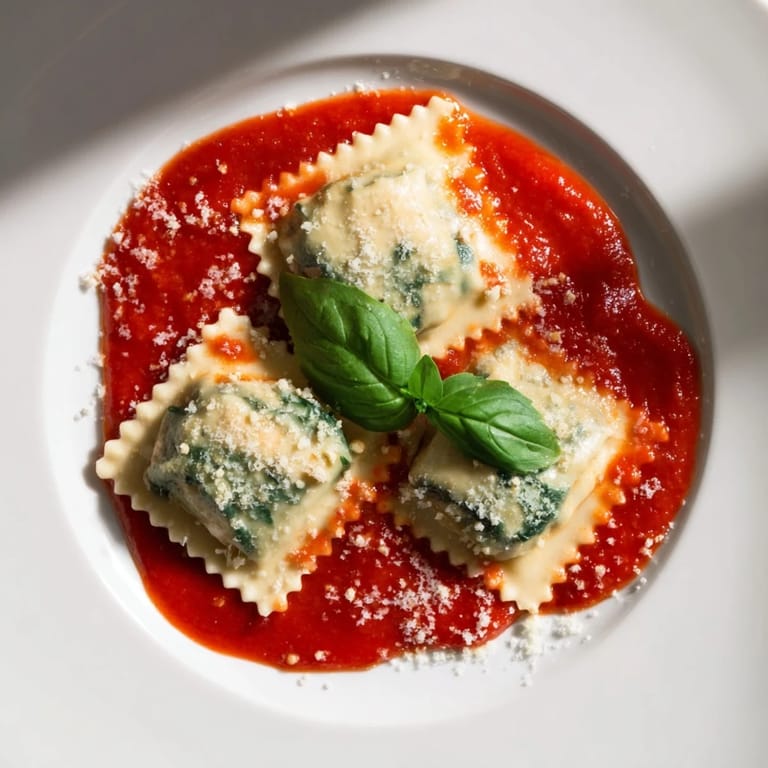
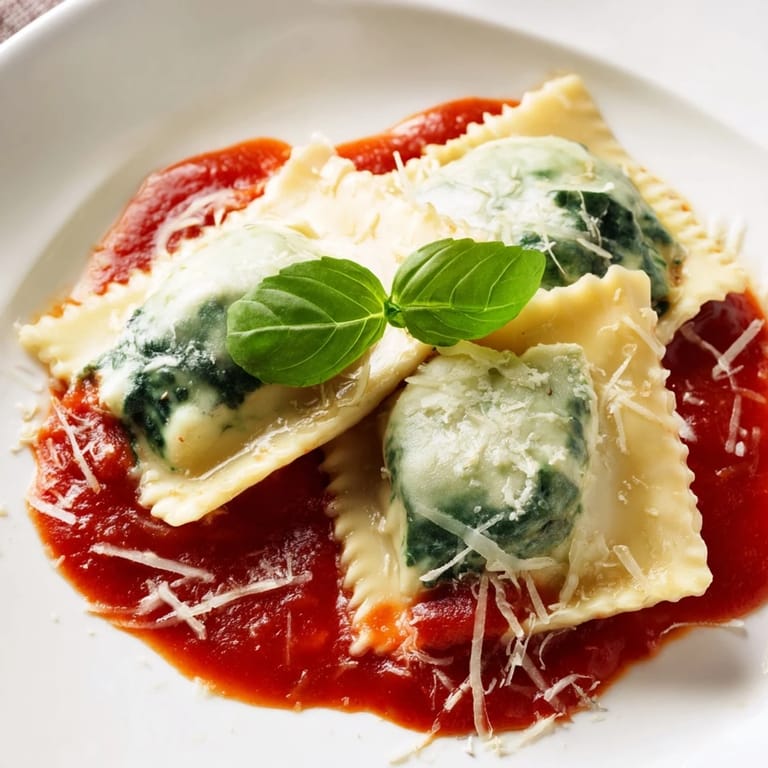
- Spoon a little sauce onto each plate, arrange the hot ravioli on top, then add more sauce, a scattering of fresh basil, and a generous sprinkle of Parmesan.
 Save
Save There's a moment when you plate the first ravioli, steam rising, sauce pooling around those tender pillows, and you realize this is the kind of meal people remember. My neighbor once told me she still thought about the ravioli I brought over after her surgery, not because it was fancy, but because it tasted like someone cared enough to spend an afternoon in the kitchen. That stuck with me.
Storing and Freezing
I always make a double batch because fresh ravioli freeze beautifully. Lay them in a single layer on a parchment-lined baking sheet, freeze until solid, then transfer to a freezer bag. You can cook them straight from frozen, just add an extra minute or two to the boiling time. Cooked ravioli keep in the fridge for up to three days, but honestly they never last that long in my house.
Filling Variations
Once you master the basic technique, you can fill ravioli with almost anything. I've done butternut squash with sage, mushroom and thyme, even a lemony ricotta with peas in the spring. The spinach and ricotta version is my comfort baseline, but it's fun to experiment when you're feeling adventurous. Just make sure whatever filling you use isn't too wet, or you'll have a mess on your hands.
Serving Suggestions
These ravioli shine with a simple marinara, but I've also tossed them in brown butter with sage and it was incredible. A crisp green salad on the side with a lemony vinaigrette cuts through the richness, and a glass of chilled Pinot Grigio ties the whole meal together. If you want to go all out, a little crusty bread for soaking up extra sauce never hurt anyone.
- Try a drizzle of good olive oil and a crack of black pepper for a minimalist finish.
- Leftover ravioli can be pan-fried in butter the next day for a crispy treat.
- Kids love helping press the fork around the edges, it's a great way to get them involved.
 Save
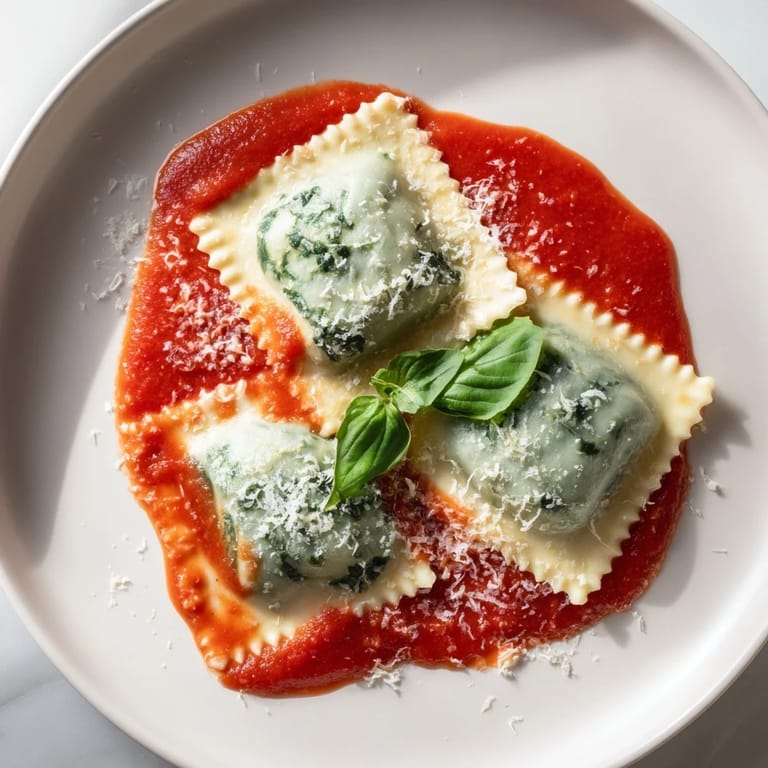
Save Making ravioli from scratch isn't something you do every day, but when you do, it turns an ordinary evening into something special. The flour on your hands, the little pockets of filling, the way they bob to the surface, it all adds up to a meal that feels like a gift, both to make and to share.
Common Questions
- → How do I prevent the ravioli from bursting while cooking?
Ensure the edges are properly sealed by brushing with water and pressing firmly with a fork. Use a gentle boil rather than a rolling boil, and cook in batches to avoid overcrowding the pot.
- → Can I prepare the ravioli ahead of time?
Yes, you can refrigerate filled ravioli for up to 24 hours on a flour-dusted tray, or freeze them for up to 3 months. Cook directly from frozen, adding 1-2 extra minutes to the cooking time.
- → What's the best way to squeeze moisture from cooked spinach?
After wilting and draining the spinach, place it in a clean kitchen towel and squeeze firmly over a sink or bowl. This removes excess liquid that could make the filling soggy and cause the ravioli to split.
- → How thin should I roll the pasta dough?
Roll to about 1/16 inch thickness, or thin enough to see your hand through it. This ensures delicate pasta that cooks evenly and won't be chewy or tough.
- → Can I use frozen spinach instead of fresh?
Absolutely. Thaw frozen spinach completely and squeeze out all moisture thoroughly before adding to the filling. This prevents the ravioli from becoming watery during cooking.
- → What wine pairs well with this dish?
A crisp white wine like Pinot Grigio complements the creamy filling and tomato sauce beautifully. The acidity cuts through the richness and enhances the fresh herb flavors.