 Save
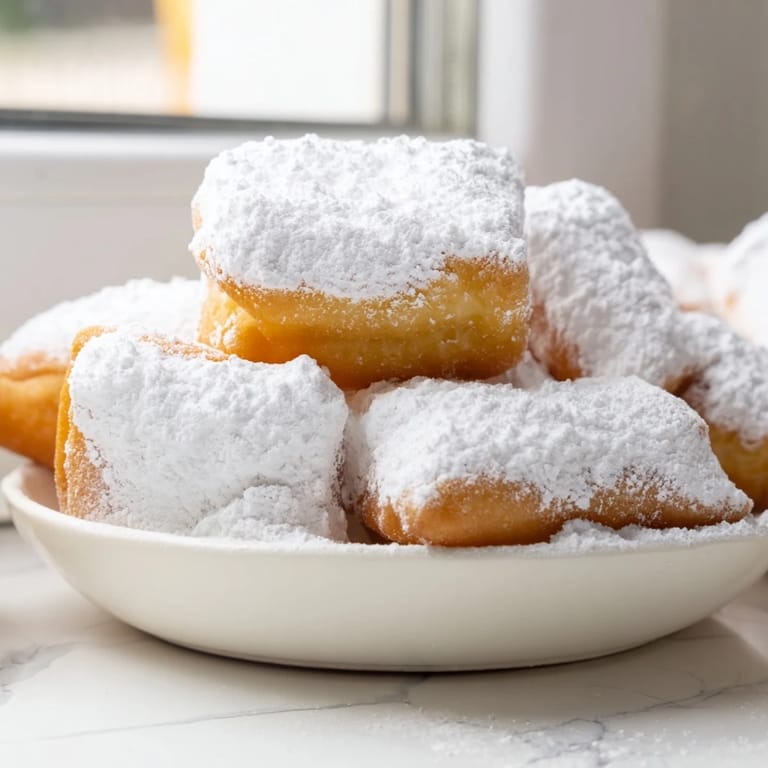
Save The first time I actually tasted a proper beignet, I was standing in the middle of a crowded café in the French Quarter, powdered sugar all over my jacket, and I understood why people make pilgrimages for these things. There's something about that moment when you bite through the crispy exterior and hit the impossibly soft, airy inside that just changes your expectations for what fried dough can be. I've tried recreating them at home more times than I care to admit, and somewhere between the failed batches and the occasional triumph, I figured out the rhythm. Now when I make them, I'm not just frying dough—I'm chasing that exact feeling of standing in a New Orleans morning with chicory coffee steam rising up and sugar coating my fingers.
I made these for my sister's birthday breakfast, and watching her face when she bit into one—still warm, still practically falling apart—made every sticky bowl worth it. She kept asking why restaurant versions never taste quite this good, and the answer is obvious: they were made two hours before she ate them. Fresh beignets are a different animal entirely.
Ingredients
- All-purpose flour (3 1/2 cups): The foundation of everything—make sure it's fresh and not packed down when you measure it, or you'll end up with dense beignets that don't puff the way they should.
- Warm water (1 cup): This is where the magic starts; too hot and you'll kill your yeast, too cool and nothing happens, so use a thermometer the first time.
- Active dry yeast (2 1/4 tsp): Don't skip the bloom step where you let it sit in the warm water for five minutes—that's when you'll see it come alive and get foamy, which means it's ready to work.
- Granulated sugar (1/4 cup): Feeds the yeast and sweetens the dough just enough so the beignets taste like dessert, not bread.
- Whole milk and egg: These make the dough tender and give the beignets that custardy interior texture you're after.
- Unsalted butter (2 tbsp, melted): Adds richness without making them heavy, so each bite feels delicate instead of greasy.
- Salt (1 tsp): Balances the sweetness and strengthens the gluten network so your dough actually holds together.
- Vegetable oil for frying: Use something neutral that won't burn at 350°F—peanut, canola, or refined vegetable oil all work perfectly.
- Powdered sugar (1 1/2 cups) for dusting: The signature coating that makes these unmistakably beignets; get the confectioners' sugar, not the superfine stuff.
Tired of Takeout? 🥡
Get 10 meals you can make faster than delivery arrives. Seriously.
One email. No spam. Unsubscribe anytime.
Instructions
- Wake up the yeast:
- Pour your warm water into a small bowl, add just a pinch of sugar, sprinkle the yeast over top, and let it sit for five minutes. You'll see it get foamy and bubbly on the surface—that's exactly what you want.
- Build the dough:
- In your big mixing bowl, whisk together the flour, remaining sugar, and salt so everything's evenly distributed. This small step keeps you from getting pockets of unmixed ingredients later.
- Bring it together:
- Pour the foamy yeast mixture into the dry ingredients, then add the milk, egg, and melted butter. Stir it all until you've got a shaggy, kind of messy looking dough—don't panic, this is exactly how it should look.
- Knead until smooth:
- Either knead by hand for about seven minutes or use your stand mixer with the dough hook for five to six minutes. You're looking for smooth, elastic dough that springs back when you poke it and doesn't stick to your hands anymore.
- Let it rise:
- Oil a bowl lightly, drop your dough in, cover it with plastic wrap or a towel, and stick it somewhere warm for an hour to ninety minutes. You want it doubled in size—the warmer your kitchen, the faster this happens.
- Shape the beignets:
- Punch down the dough to release some of the air, then transfer it to a floured surface and roll it out to about a quarter inch thick. Using a sharp knife or pizza cutter, cut it into two-inch squares—don't overthink this part, they don't need to be perfect.
- Heat the oil:
- Pour oil into your deep fryer or heavy pot and let it come to 350°F. Use a thermometer here because this temperature is crucial; too hot and they'll burn outside and stay doughy inside, too cool and they'll absorb oil like sponges.
- Fry in batches:
- Don't crowd the pan—fry three or four beignets at a time so they have room to puff up. They'll sink at first, then float, then turn themselves over about halfway through cooking, which takes roughly one to two minutes per side.
- Drain and dust:
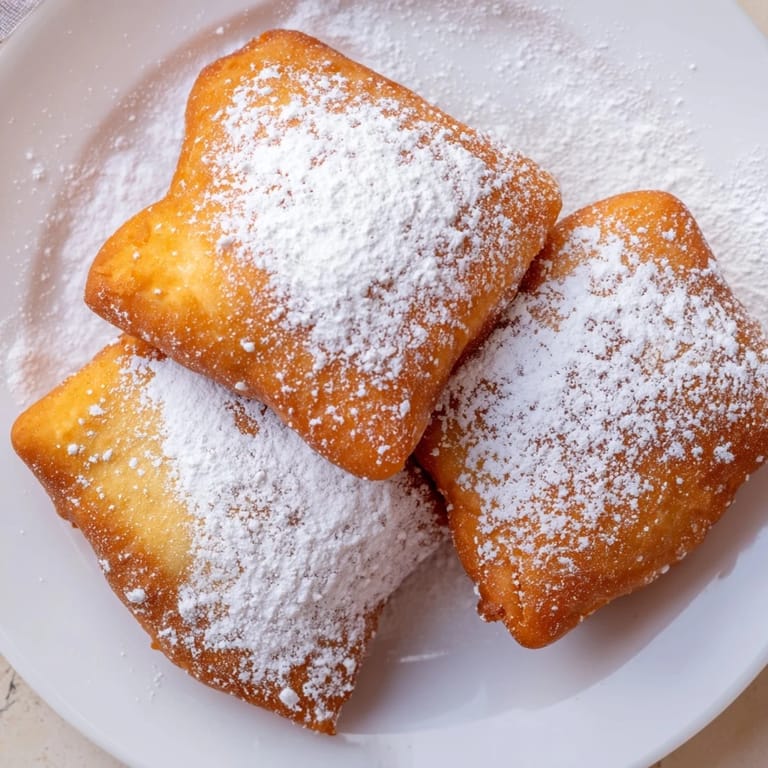
- Lift them out with a slotted spoon and let them drain on paper towels for just a minute or two. While they're still warm, dust them generously with powdered sugar—and I mean generously, that's the whole point.
 Save
Save The moment that made me fall in love with making these at home wasn't actually when they turned out perfect—it was when they didn't, and my dad took one anyway, bit into it, got powdered sugar absolutely everywhere, and said it was still better than anything he'd had in years. Sometimes food isn't about executing flawlessly; it's about the generosity of the people eating it.
The Real Secret to Perfect Beignets
Everyone wants to know if there's some special trick, and honestly, the secret is just patience with the rise. I used to rush it, trying to get from mixing bowl to hot oil in forty minutes, and every single time they'd be dense and disappointing. The first time I actually let them rise for the full hour and a half, something clicked—they puffed up in the oil like they were supposed to, and I realized I'd been sabotaging myself the whole time by being impatient.
Serving and Storing
Beignets are honestly best eaten the second they come out of the oil, while they're still steaming and the sugar is still coating your hands. But if you have leftovers (which, let's be real, you probably won't), you can reheat them in a 350°F oven for a few minutes and they'll taste pretty close to fresh. I always serve mine with café au lait because that's how they do it in New Orleans, and there's something about that chicory-tinged coffee with the sweet fried dough that just works.
Making Them Your Own
Once you've nailed the basic recipe, the fun part is playing around with add-ins and flavors without overthinking it. A touch of vanilla extract in the dough, a tiny pinch of nutmeg, even a whisper of cinnamon can push these in different directions while keeping them unmistakably beignets. The beauty is that the fried dough base is forgiving enough to handle a little experimentation, and the powdered sugar topping is so dominant that you're mostly just tweaking the subtle background notes.
- A vanilla bean or two grated into the dough gives a sophisticated depth without making them taste like vanilla cake.
- If you want to try something fun, dust them with cinnamon sugar instead of just powdered sugar for an entirely different vibe.
- Make sure you eat them standing up over a plate—that's half the charm anyway.
 Save
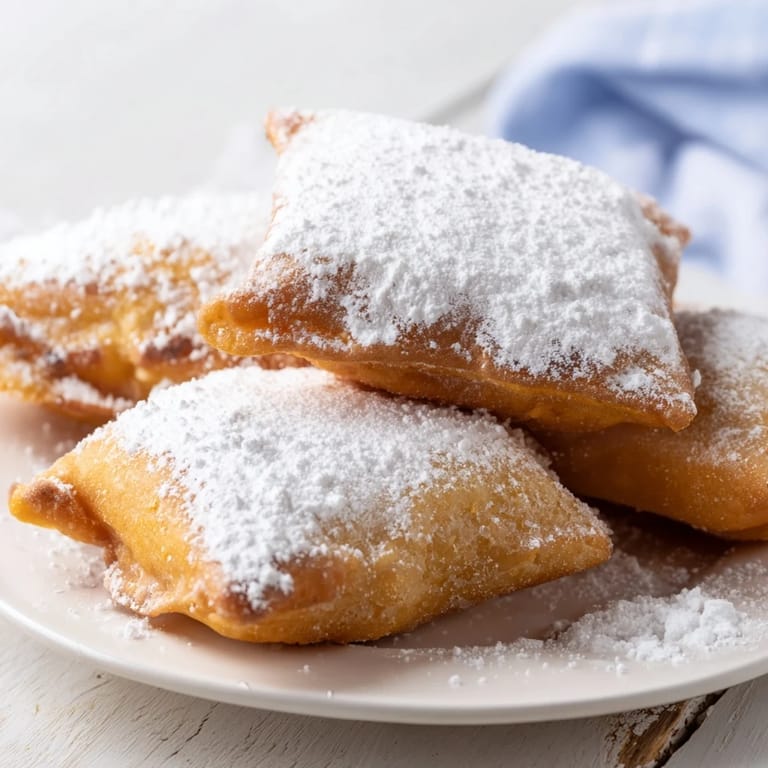
Save These beignets are the kind of recipe that rewards you for slowing down and actually paying attention, and once you taste your own homemade ones, you'll understand why people line up for them at sunrise in the French Quarter. Go make some.
Common Questions
- → How do I achieve the perfect fluffiness?
Ensure the dough rises fully until doubled and fry at a consistent 350°F. This creates airy pockets inside.
- → Can I prepare the dough in advance?
Yes, prepare and let the dough rise, then refrigerate. Bring back to room temperature before frying.
- → What oil is best for frying?
Use a neutral oil with a high smoke point like vegetable oil for even frying without off-flavors.
- → How thick should the dough be rolled?
Roll the dough to about 1/4 inch thick to ensure the squares puff properly while frying.
- → Any tips for serving suggestions?
Serve warm with a generous dusting of powdered sugar; pairing with café au lait enhances the experience.