 Save
Save The smell of miso dissolving into warm broth always takes me straight back to a tiny ramen shop I stumbled into during a rainstorm in Seattle. I was soaked, cranky, and starving, and the bowl they set in front of me changed everything I thought I knew about noodle soup. When I got home, I wanted that same comfort without the two-hour drive, so I started tinkering with chicken thighs, soba noodles, and whatever vegetables looked good at the market. This bowl became my rainy-day reset, my weeknight win, and honestly, the dish I make when I need to feel like everything's going to be okay.
I made this for my sister the night before she moved across the country, and we sat on the kitchen floor with our bowls because the dining table was already packed. She kept fishing out the soft-boiled eggs and declaring them the best part, while I hoarded the bok choy. We didn't talk much, just slurped noodles and listened to the rain, and I think that bowl said everything we couldn't. Now every time I make it, I text her a picture, and she sends back a chopstick emoji and a heart.
Ingredients
- Boneless, skinless chicken thighs or breasts: Thighs stay juicier and more forgiving if you overcook them slightly, but breasts work if that's what you have on hand.
- White miso paste: This is your flavor backbone; it adds umami, salt, and a whisper of sweetness that makes the whole bowl hum.
- Low-sodium soy sauce: Controls the salt level so you don't end up with a broth that tastes like the ocean in a bad way.
- Rice vinegar: Brightens the marinade and keeps the chicken from tasting flat or one-note.
- Honey or maple syrup: Balances the salty miso and helps the chicken caramelize beautifully in the pan.
- Fresh ginger and garlic: Grate them finely so they melt into the marinade instead of clumping; fresh makes all the difference here.
- Toasted sesame oil: A little goes a long way, adding a nutty richness that ties everything together.
- Soba noodles or whole wheat spaghetti: Soba has that earthy buckwheat flavor, but if you can't find it, whole wheat pasta is a solid stand-in.
- Low-sodium chicken broth: The base of your soup; taste it before you add miso because some broths are saltier than others.
- Shiitake mushrooms: They add a meaty, earthy depth that makes the broth taste like it simmered for hours.
- Carrot, bok choy, snow peas, and spinach: A mix of textures and colors that keeps every spoonful interesting and alive.
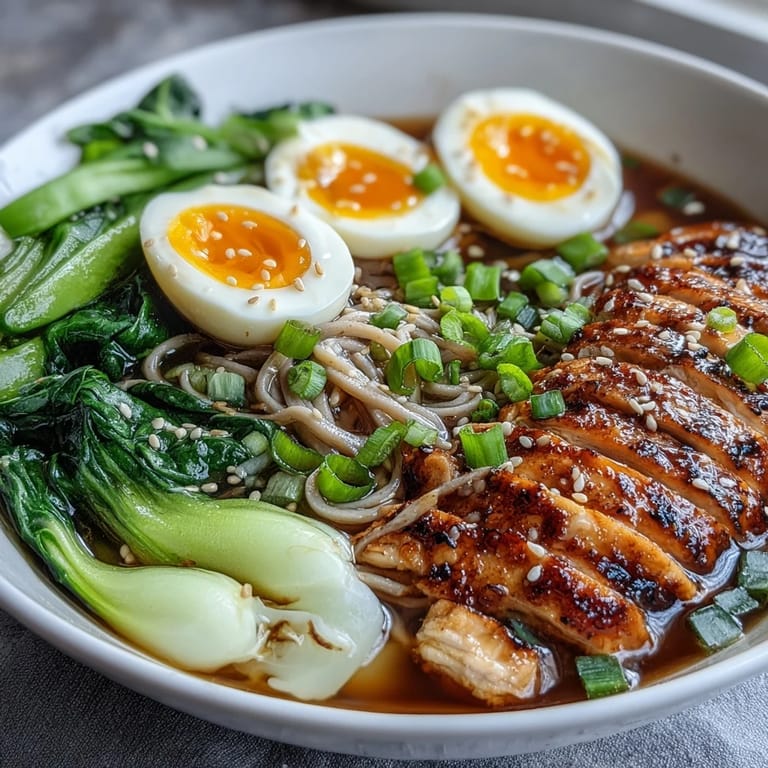
- Soft-boiled eggs: Totally optional, but that jammy yolk stirred into the broth is pure magic.
- Scallions, sesame seeds, cilantro, nori, chili oil: These toppings aren't just pretty; they add pops of flavor and heat that make the bowl feel complete.
Tired of Takeout? 🥡
Get 10 meals you can make faster than delivery arrives. Seriously.
One email. No spam. Unsubscribe anytime.
Instructions
- Make the marinade:
- Whisk together miso, soy sauce, rice vinegar, honey, ginger, garlic, and sesame oil until it's smooth and glossy. It should smell sweet, salty, and a little funky in the best way.
- Marinate the chicken:
- Coat the chicken evenly, cover it, and let it sit in the fridge for at least 30 minutes. If you have time, go longer; overnight makes the flavors sing.
- Cook the noodles:
- Boil the soba until just al dente, then rinse them under cold water to stop the cooking. Toss with a tiny bit of sesame oil so they don't turn into a clump while you finish everything else.
- Sear the chicken:
- Heat your pan until it's really hot, shake off the excess marinade, and cook the chicken until it's golden and the internal temp hits 165°F. Let it rest for five minutes before slicing so the juices don't run all over your cutting board.
- Build the broth:
- Simmer the chicken broth and water, then whisk in the miso until it dissolves completely. Add mushrooms, carrots, bok choy, and snow peas, cooking just until tender but still bright.
- Assemble the bowls:
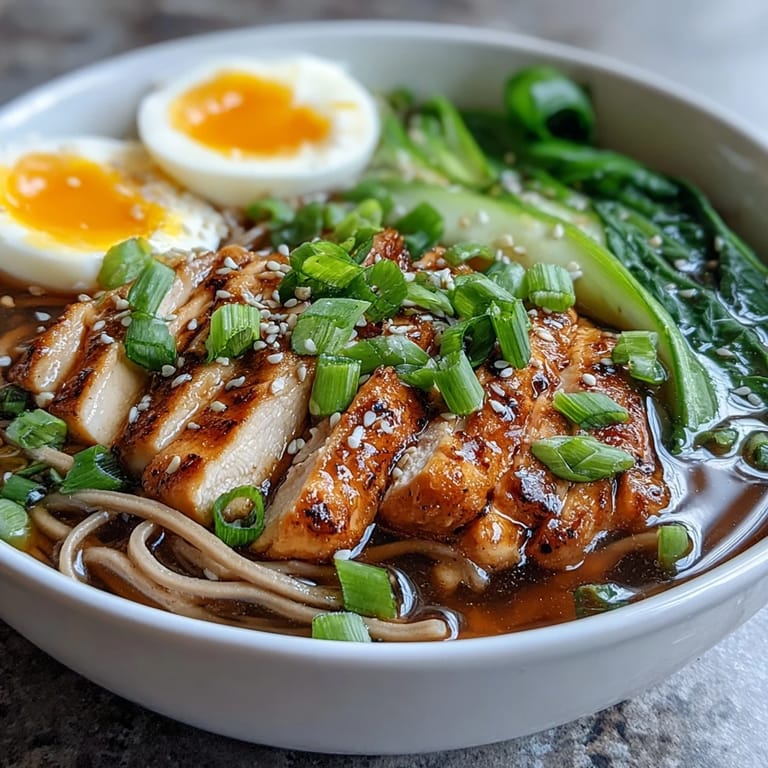
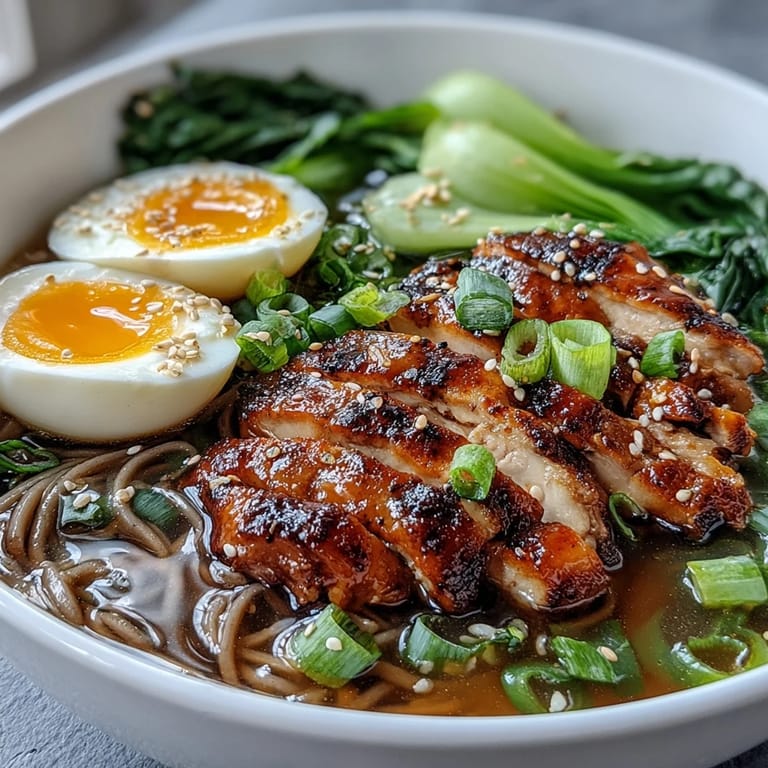
- Divide noodles between bowls, top with sliced chicken, and ladle the hot broth and vegetables over everything. Finish with eggs, scallions, sesame seeds, cilantro, nori, and a drizzle of chili oil if you like heat.
 Save
Save One night I made this for a friend who'd just had her heart broken, and she cried into her bowl and then laughed because crying into soup is ridiculous. But she finished every drop, went back for seconds, and told me it was the first thing that tasted good in weeks. That's when I realized this recipe isn't just about feeding people; it's about giving them a moment to breathe, to feel warm, to remember that small comforts still matter.
Swaps and Substitutions
If you want to make this vegetarian, swap the chicken for extra-firm tofu that's been pressed and marinated the same way, and use vegetable broth instead of chicken. I've also used shrimp when I had it on hand, and it cooks even faster than the chicken. For the vegetables, broccoli, edamame, snap peas, or even thinly sliced bell peppers all work beautifully, so use what you have or what's in season. If you can't find soba, whole wheat spaghetti or even rice noodles will do the job just fine.
Make It Your Own
This bowl is endlessly adaptable, which is part of why I love it so much. If you like it spicier, stir a spoonful of gochujang or sambal oelek into the broth. For a richer bowl, add a splash of coconut milk or a spoonful of tahini. I've made it with leftover rotisserie chicken when I was too tired to marinate anything, and it was still delicious. Some nights I skip the egg, other nights I add two, and every version feels right depending on my mood.
Serving and Storage
Serve this immediately while the broth is steaming and the vegetables still have a little snap. If you're making it ahead, store the broth, noodles, chicken, and toppings in separate containers so nothing gets soggy. Reheat the broth gently, warm the noodles in hot water, and assemble fresh bowls as needed.
- Leftover chicken and broth will keep in the fridge for up to three days.
- Cooked noodles are best eaten within a day, but you can refresh them quickly in boiling water.
- Soft-boiled eggs should be made fresh each time for the best texture and that perfect jammy yolk.
 Save
Save This bowl has become my go-to for when I need to feed my body and my soul at the same time. I hope it brings you as much comfort as it's brought me.
Common Questions
- → Can I make this bowl gluten-free?
Use 100% buckwheat soba noodles or gluten-free alternatives, and substitute tamari for soy sauce. Check that your miso paste is certified gluten-free, as some varieties contain barley or wheat.
- → What vegetables work best in this dish?
Bok choy, shiitake mushrooms, and snow peas provide authentic Asian flavors, but broccoli, edamame, snap peas, or bell peppers also work beautifully. Choose vegetables that hold their texture in hot broth.
- → Can I prepare components ahead of time?
Marinate chicken overnight for deeper flavor. Cook noodles and prepare vegetables up to a day in advance, but store broth separately and reheat gently to maintain the best texture and prevent sogginess.
- → How do I achieve perfectly soft-boiled eggs?
Bring water to a gentle boil, lower cold eggs in carefully, and cook for exactly 6-7 minutes. Transfer immediately to an ice bath to stop cooking. Peel just before serving for the runniest yolk consistency.
- → Can I use other proteins besides chicken?
Firm tofu, seared salmon, or shrimp work wonderfully as alternatives. Marinate tofu similarly to chicken, though it needs less time to absorb flavors. Adjust cooking times accordingly for your chosen protein.
- → What gives this dish its umami richness?
White miso paste provides the foundational umami, enhanced by soy sauce and shiitake mushrooms. The combination creates that deep, savory taste characteristic of Japanese cuisine without needing added MSG.