 Save
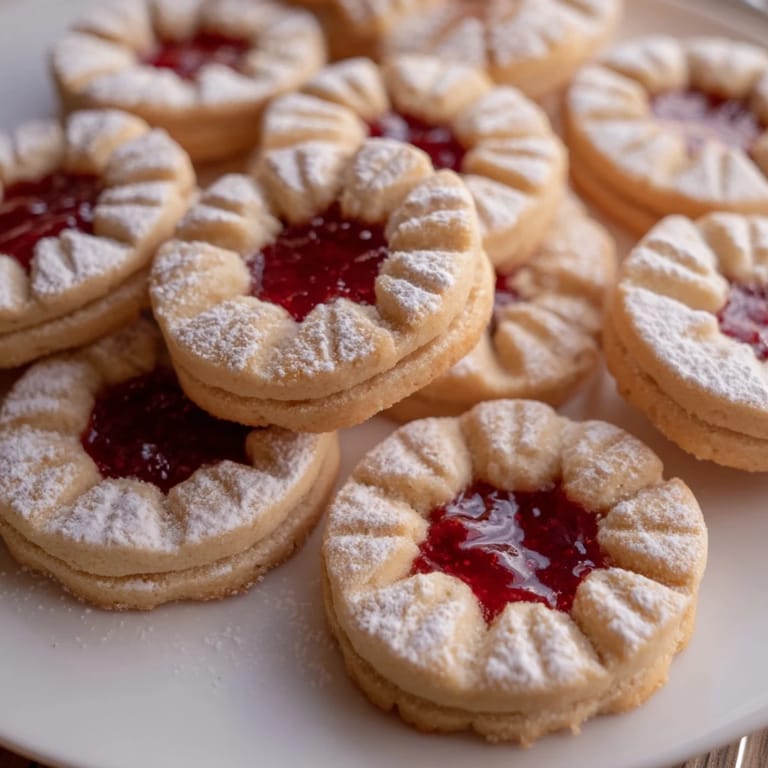
Save There's something about Austrian Christmas markets that stays with you—the smell of cinnamon and almonds drifting through the cold air, the sight of delicate latticed cookies piled high on wooden stands. I tasted my first Linzer cookie at a friend's holiday dinner years ago, and the moment the buttery almond dough crumbled on my tongue, followed by that bright burst of raspberry jam, I was completely won over. What struck me most was how elegant they looked, yet how approachable the recipe actually turned out to be. Now whenever I make them, the kitchen fills with that same warm, festive feeling, and I'm reminded why these cookies have been treasured for generations.
I'll never forget the year my neighbor brought over her handmade Linzers on a snowy December evening, and we sat in my kitchen dunking them in hot chocolate like we were eight years old again. Her latticed tops were perfect, mine always have a few wonky windows, but somehow that's become part of the charm. That evening taught me that these cookies aren't really about perfection—they're about the moment you share them with someone, the way their eyes light up when they bite into that jam center.
Ingredients
- All-purpose flour (2 cups/250g): This is your structural backbone; it keeps the cookies crisp at the edges while staying tender within, and measuring by weight ensures you don't pack it too tightly.
- Finely ground blanched almonds or almond flour (1 cup/100g): This is what makes Linzers distinctly Linzers—the almond flour adds a subtle nuttiness and keeps the dough from becoming tough, plus it creates that signature sandy texture.
- Ground cinnamon (1/2 teaspoon): Use fresh cinnamon if you have it; stale spice will disappear into the background, but good cinnamon creates warmth without overpowering the delicate almond flavor.
- Salt (1/4 teaspoon): This tiny amount amplifies all the other flavors and prevents the cookies from tasting one-note.
- Unsalted butter, softened (3/4 cup/170g): Softened (not melted) butter creams into a light, fluffy base that makes these cookies melt in your mouth—cold butter will fight you every step of the way.
- Powdered sugar (2/3 cup/80g, plus extra for dusting): Powdered sugar dissolves into the dough for a tender crumb; granulated would make them tough, so don't substitute.
- Egg yolk (1 large): Just the yolk binds everything without adding the extra moisture that whole eggs would bring, keeping the dough workable and the baked cookies tender.
- Pure vanilla extract (1 teaspoon): Vanilla bridges the gap between the almond and jam, adding a subtle sweetness without making the cookies taste artificial.
- Grated lemon zest (1/2 teaspoon): This is the secret ingredient that makes people pause and ask what makes these cookies taste so special—it adds brightness without any tartness.
- Seedless raspberry jam (3/4 cup/225g): Choose a jam with good flavor and a little body; thin, overly sweet jam will make the cookies taste cloying, while good jam makes them feel luxurious.
Tired of Takeout? 🥡
Get 10 meals you can make faster than delivery arrives. Seriously.
One email. No spam. Unsubscribe anytime.
Instructions
- Gather and measure everything:
- Before you start mixing, set out all your ingredients so you're not fumbling around looking for things mid-recipe. This is especially important with the butter—if it's not properly softened, your cookies won't have that light, tender crumb.
- Make your dry mix:
- Whisk the flour, almond flour, cinnamon, and salt in a medium bowl, making sure the cinnamon is evenly distributed. This step prevents little speckles of cinnamon from clumping up later.
- Cream the butter and sugar:
- Beat softened butter with powdered sugar for 2–3 minutes until it's pale and fluffy, which should feel like you're working with clouds. This aeration is what gives the cookies their tender crumb, so don't skip this step even though it feels tedious.
- Add the wet ingredients:
- Drop in the egg yolk, vanilla, and lemon zest, beating until completely combined and the mixture looks smooth. If you're not sure whether it's fully incorporated, mix for another 30 seconds.
- Bring the dough together:
- Add the dry ingredients to the wet mixture in two additions, mixing just until everything comes together. Overmixing develops gluten and makes the cookies tough, so resist the urge to beat it into submission.
- Rest the dough:
- Divide the dough in half, flatten each piece into a disk, wrap them in plastic, and chill for at least 1 hour (or even overnight). Cold dough is much easier to work with and will give you cleaner cuts when you use your cookie cutters.
- Prep your workspace:
- While the dough chills, preheat your oven to 350°F (175°C) and line two baking sheets with parchment paper. Having everything ready means you can work at a comfortable pace without rushing.
- Roll with intention:
- On a lightly floured surface, roll one disk of dough to about 1/8 inch thickness—thin enough to bake through quickly but thick enough to hold together when you lift the cookie. If the dough gets too warm and sticky, chill it again for 10 minutes.
- Cut your shapes:
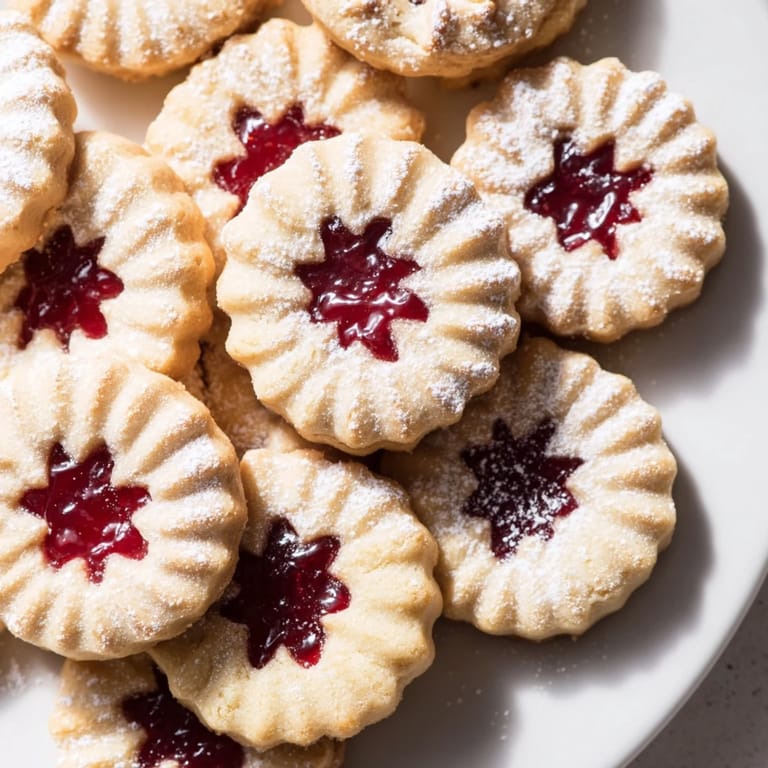
- Using a 2-inch round or fluted cutter, cut out cookies and place half of them on the prepared baking sheets. With a smaller 1-inch cutter, cut out the centers of the remaining cookies to create windows for the jam to peek through.
- Reroll your scraps:
- Gather the scraps, gently re-form them into a disk, chill for 10 minutes, and roll out again. You should get most of your scrap dough to yield perfect cookies.
- Bake with patience:
- Bake for 10–12 minutes until the edges are just beginning to turn golden brown; the centers might still look barely set, but they'll continue to cook slightly as they cool. This is the difference between underbaked (which will be deliciously tender) and overbaked (which will be crisp and hard).
- Cool completely:
- Let the cookies rest on the baking sheet for 2 minutes, then transfer them to a wire rack to cool all the way through. Trying to assemble them while warm will result in broken cookies and a kitchen disaster.
- Add the finishing touch:
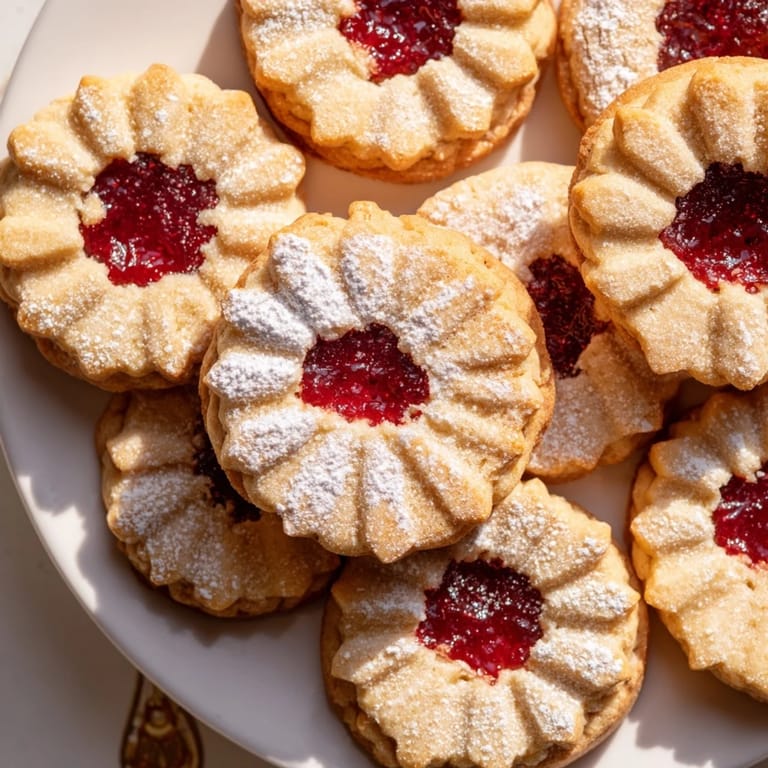
- Once completely cooled, dust the top cookies (the ones with cutouts) with powdered sugar, which adds elegance and catches the light beautifully.
- Assemble with care:
- Spread about 1 teaspoon of raspberry jam on the flat side of each bottom cookie, then gently press a sugared top cookie on top. The jam should squeeze out slightly around the edges, creating those picture-perfect little pockets.
- Let them set:
- Allow the assembled cookies to rest for at least 30 minutes before serving so the jam sets and the structure becomes stable. This resting period also lets all the flavors meld together beautifully.
 Save
Save There was one afternoon when my daughter asked if we could make these cookies together for a school bake sale, and I watched her carefully press the smaller cutter into each cookie top, her tongue poking out in concentration. She was so proud when they came out of the oven, and even more proud when every single one sold. That's when I realized these cookies represent something bigger than just technique—they're an invitation to slow down, get your hands in the dough, and create something that brings joy to others.
Why These Cookies Matter
Linzer cookies sit at this beautiful intersection of rustic and refined—they're not fussy or demanding, yet they feel special enough to serve at your finest tea party. The beauty of the recipe is that it celebrates simplicity; there are no fancy techniques, no temperamental ingredients, just good butter, quality almonds, and the brightness of lemon and raspberry working in harmony. What makes them memorable isn't complexity—it's the balance of flavors and the care you take in each step.
The Art of the Lattice
The lattice window isn't just decoration; it's a window into what makes these cookies special, letting the ruby jam shine through. When I first started making these, I obsessed over making perfect geometric patterns, but I've since learned that the charm lies in the effort, not the perfection. Hand-cut windows will never be perfectly uniform, and that's exactly what makes them look homemade and genuine.
Storage and Serving Secrets
These cookies actually improve as they sit—the flavors deepen, the jam sets firmer, and the layers become more integrated over a day or two. Store them in an airtight container at room temperature for up to 5 days, and they'll still taste fresh and fragrant. They pair beautifully with hot tea, dessert wine, or even a simple glass of cold milk.
- If you want to make them ahead, assemble the cookies the day before serving so the jam has time to fully set and the structure becomes stable.
- For gifting, layer them between parchment paper in a pretty tin—they look as good as they taste, and people always feel like they've received something truly special.
- If you experiment with apricot or blackcurrant jam instead of raspberry, dust the tops with a pinch of sea salt to balance the sweetness and add an unexpected sophisticated note.
 Save
Save Making Linzer cookies is a quiet joy, one of those recipes that doesn't demand much but rewards you with something beautiful and delicious. Every time I smell that cinnamon-almond aroma wafting through my kitchen, I'm reminded why these cookies have endured for generations and why they'll always have a place on my holiday table.
Common Questions
- → What gives these cookies their tender texture?
The combination of softened unsalted butter and finely ground almonds creates a tender, buttery dough that melts in the mouth.
- → How is the lattice pattern created on the cookies?
The tops are cut using a smaller round cutter to create windows or lattice shapes before baking, adding a decorative touch.
- → Can the raspberry jam be substituted?
Yes, apricot or blackcurrant preserves make excellent alternatives for a different flavor profile.
- → Why is the dough chilled before baking?
Chilling firms the dough, making it easier to roll and cut while helping maintain shape during baking.
- → How should the cookies be stored?
Store in an airtight container at room temperature for up to five days to keep freshness and texture.
- → Are these suitable for a nut-free diet?
You can replace the almond flour with additional all-purpose flour to make a nut-free variation.