 Save
Save My grandmother kept a small tin of mustard seeds in her kitchen cabinet, and the day she taught me this soup, the kitchen filled with that unmistakable pop and crackle before I'd even finished chopping the onions. She said mung beans were her secret weapon on mornings when the house felt too quiet, when someone needed feeding back to health. This soup became mine the same way—not from a recipe book, but from watching her hands move through the steps with the kind of certainty that comes from decades of knowing what works.
I made this for my roommate during her first real illness away from home, and watching her shoulders relax after the first spoonful was when I understood why my grandmother guarded this recipe so carefully. The smell alone—that earthy cumin and ginger cutting through the steam—seemed to do half the healing work. She asked for it three more times that month, and now it's become our unspoken language for showing up for each other.
Ingredients
- Dried mung beans: Soak them overnight if you can, as this cuts your cooking time nearly in half and makes the beans break down more beautifully into that creamy texture you're after.
- Fresh ginger and garlic: Don't even think about using the jarred versions here—the fresh stuff is what carries the whole flavor profile, and you'll taste the difference immediately.
- Ground cumin and coriander: Toast them lightly in the dry pan before adding the oil if you want to unlock their deeper, warmer side, though the mustard seeds will do much of that work for you.
- Turmeric powder: Beyond its golden color, this is where the soup's anti-inflammatory magic lives, so don't skip it or reduce it.
- Mustard seeds: These little seeds are non-negotiable—they pop and release oils that flavor the entire pot, and there's honestly no real substitute for that moment of sizzle.
- Asafoetida: If you can find it, use it; if not, the soup is still wonderful, but it adds a savory depth that makes people ask what your secret ingredient is.
- Water or vegetable broth: Use broth if you want more body, but plain water lets the beans and spices take center stage without competing voices.
- Fresh cilantro and lemon juice: These are the finale—they brighten everything right before serving and make the difference between good soup and soup people remember.
Tired of Takeout? 🥡
Get 10 meals you can make faster than delivery arrives. Seriously.
One email. No spam. Unsubscribe anytime.
Instructions
- Prepare your beans:
- After soaking, drain them well and rinse under cool water until the water runs mostly clear—this removes some of the starch and helps the soup stay cleaner as it cooks.
- Start with the mustard seeds:
- Heat a splash of oil in your large pot over medium heat, then add the mustard seeds and wait. You'll know they're ready when they start popping and jumping around like tiny fireworks—this takes about 30 seconds, and it's the moment your soup's flavor foundation locks in.
- Build your base:
- Toss in your chopped onion, minced garlic, and grated ginger, letting them soften together for about 3 minutes until the onion turns translucent and the raw edge melts away. The kitchen will smell so good at this point that you might pause just to breathe it in.
- Add your vegetables and spices:
- Stir in carrots, tomato, green chili if you're using it, then all your ground spices and asafoetida. Cook for another 2 minutes so everything gets to know each other and the spices wake up fully.
- Bring the soup to life:
- Pour in your soaked mung beans and the water or broth, then bring everything to a boil before turning down the heat to low. Simmer uncovered for 35 to 40 minutes, stirring occasionally, until the beans are completely soft and starting to break apart slightly, thickening the soup naturally.
- Season and finish:
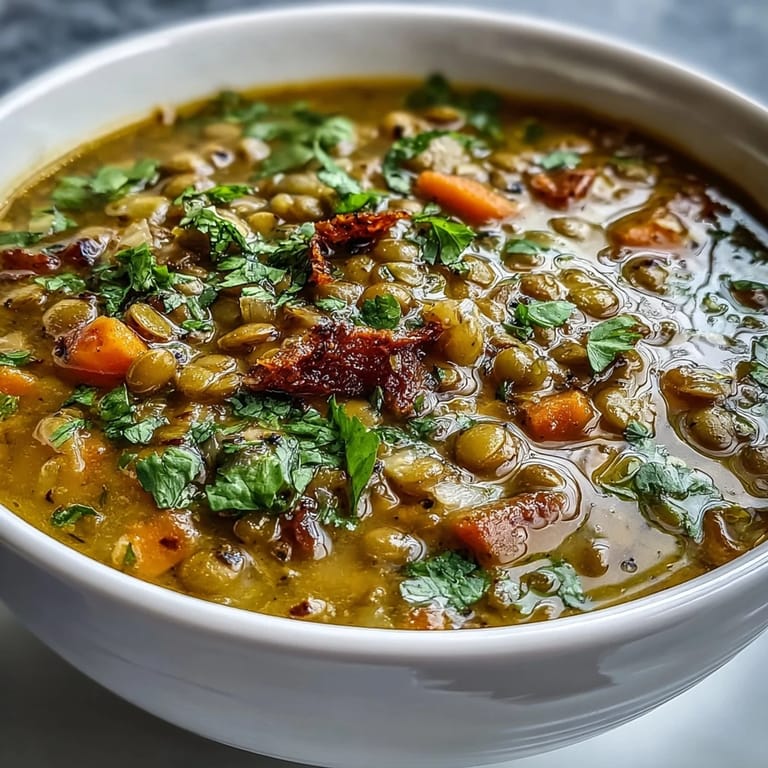
- Taste it, adjust the salt, squeeze in your lemon juice, and sprinkle cilantro on top right before serving—these final touches make everything sing together.
 Save
Save There's a moment in cooking when you stop thinking about following steps and just exist in the rhythm of the work—stirring, tasting, adjusting. This soup does that to me every time, and I realized years in that's when food stops being ingredients and becomes something you share that actually matters.
The Comfort Science Behind Mung Beans
Mung beans have been used in traditional medicine for centuries, and there's actual wisdom in that tradition. They're easier to digest than many legumes, packed with protein and fiber without the heaviness, and they absorb flavors so thoroughly that you feel like you're eating something both nourishing and deeply satisfying at once. My grandfather always said they were the thinking person's bean—gentle but substantial, humble but complete.
Why This Tastes Like Home
Every culture has a version of this soup, which tells you something about human nature and comfort. The combination of warming spices with soft beans and bright citrus creates a flavor that feels both grounding and elevating, like your body recognizes exactly what it needs. You can serve this alone or with rice and flatbread, and it works either way because the soup is complete in itself.
Variations and Additions Worth Trying
Once you've made this basic version a few times, you'll start seeing opportunities everywhere. I've added spinach and kale for extra greens, stirred in a splash of coconut milk for richness on colder nights, and even experimented with adding red lentils for a different texture. The foundation is so strong that it welcomes your creativity without losing its identity.
- If you want creamier soup, mash some beans or stir in a spoonful of tahini right before serving.
- For more heat, add fresh green chili or a pinch of cayenne, but start small and taste as you go.
- Pair with basmati rice or warm naan to turn a bowl of soup into a complete, satisfying meal.
 Save
Save This soup taught me that nourishment and love speak the same language, and that sometimes the most powerful thing you can offer someone is time spent in your kitchen making something from scratch. Make it for yourself on a quiet morning, or make it for someone who needs reminding that they're cared for.
Common Questions
- → Do I need to soak mung beans before cooking?
Yes, soaking dried mung beans for 4 hours or overnight helps them cook evenly and reduces cooking time. It also makes them easier to digest. If you're short on time, a minimum of 2 hours will work, though the beans may take slightly longer to soften.
- → Can I use canned mung beans instead?
Canned mung beans aren't commonly available, but if you find them, you can substitute about 2 cans (15 ounces each). Rinse them thoroughly and add during the last 15 minutes of cooking just to heat through and blend flavors. The texture will be slightly different from dried beans cooked from scratch.
- → How can I make this soup creamier?
For a naturally creamy texture, use a wooden spoon to mash about one-third of the cooked beans against the side of the pot. This releases starch and thickens the broth beautifully. Alternatively, blend a portion of the soup and return it to the pot for a velvety consistency without adding dairy.
- → What vegetables can I add or substitute?
This soup is quite flexible. Try adding diced potatoes for extra heartiness, spinach or kale in the last 5 minutes for greens, or bell peppers for sweetness. You can omit carrots if desired, though they add natural sweetness that balances the spices.
- → How long does this soup keep in the refrigerator?
Stored in an airtight container, this soup keeps well for 4-5 days in the refrigerator. The flavors actually develop and deepen over time, making it an excellent meal prep option. Reheat gently on the stovetop, adding a splash of water if it has thickened too much.
- → Is asafoetida (hing) necessary?
Asafoetida is optional but adds a distinctive umami flavor often used in Indian cooking. If you don't have it, the soup will still be delicious. Just be aware that some brands contain wheat, so check the label if you need it to be gluten-free.