 Save
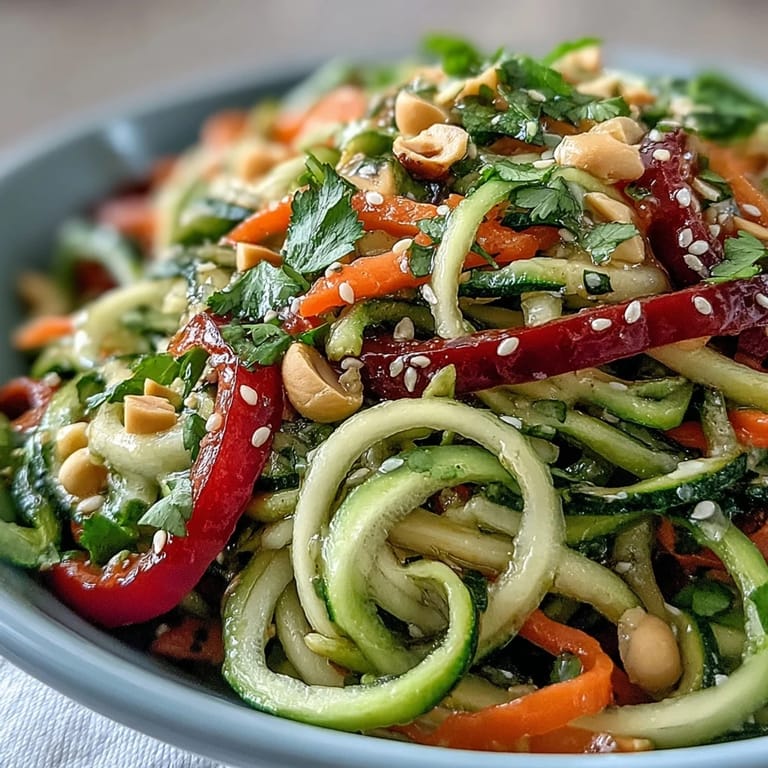
Save My spiralizer sat unused in a cabinet for months until a friend showed up with an armful of farmers market vegetables and zero appetite for the usual routine. We stood in my kitchen on a humid afternoon, and she challenged me to make something that didn't feel like salad season obligation. That's when this noodle salad happened—not planned, just born from turning vegetables into ribbons and discovering that the real magic was in a dressing so bright it practically glowed amber in the afternoon light.
I brought this to a potluck last summer where everyone was sweating over hot dishes, and someone actually asked for the recipe before taking their second bite. That moment when a friend eats something you made and stops mid-conversation to ask what's in the dressing? That's the feeling this salad gives, every single time.
Ingredients
- Zucchini, spiralized: The most forgiving base—mild, tender, and absorbs the dressing like it was made for this exact purpose.
- Carrot, spiralized: Brings natural sweetness and that satisfying crunch that stays even as the salad softens.
- Red bell pepper, thinly sliced: Adds color and a subtle sweetness that balances the sesame oil's earthiness.
- Red cabbage, shredded: The secret to texture holding up—it stays crisp no matter how long the salad sits.
- Cucumber, spiralized: Keeps everything feeling fresh and light, like you're eating something that just left the garden.
- Green onions, sliced: A whisper of onion flavor that appears and disappears with each bite.
- Fresh cilantro: Non-negotiable if you love that herb-forward finish that makes your whole mouth wake up.
- Toasted sesame oil: Buy the good stuff—it's the backbone of the whole dressing, so it deserves quality.
- Rice vinegar: Milder than regular vinegar, letting the ginger and sesame shine without sharp edges.
- Low-sodium soy sauce or tamari: Tamari is your friend if gluten is a concern, and honestly tastes just as good.
- Freshly grated ginger: Ground ginger feels like cheating here—fresh ginger has bite and brightness that changes everything.
- Maple syrup or honey: Just enough sweetness to balance the acid and make the dressing feel complete.
- Garlic, minced: Raw garlic works perfectly since there's no cooking—it stays peppery and alive.
- Lime juice: One tablespoon might seem small, but it's the final note that ties the whole thing together.
- Chili flakes: Optional, but they add a subtle warmth that builds as you eat.
- Toasted sesame seeds: Toasting them yourself makes a difference, but store-bought works when time is tight.
- Roasted peanuts or cashews: The crunch that makes people think you spent more time on this than you did.
Tired of Takeout? 🥡
Get 10 meals you can make faster than delivery arrives. Seriously.
One email. No spam. Unsubscribe anytime.
Instructions
- Prep your vegetables like you mean it:
- Spiralize the zucchini, carrot, and cucumber into a large bowl—this is where your spiralizer earns its space on the counter. Don't stress about perfect noodles; the dressing will make them all look intentional.
- Slice and shred what won't spiralize:
- Thin slice the bell pepper and green onions, shred the cabbage, and chop your cilantro. A sharp knife makes this feel effortless instead of tedious.
- Build the dressing in a separate bowl:
- Whisk together the sesame oil, rice vinegar, soy sauce, ginger, maple syrup, garlic, lime juice, and chili flakes. Taste it straight from the whisk—it should make you pause and savor.
- Toss everything together with intention:
- Pour the dressing over your vegetables and toss gently, making sure every noodle gets coated. This is the moment where raw vegetables transform into something that feels intentional.
- Let it breathe for five to ten minutes:
- The flavors need time to introduce themselves to each other. Walk away and let the vegetables start releasing their water and absorbing the dressing.
- Plate and garnish with personality:
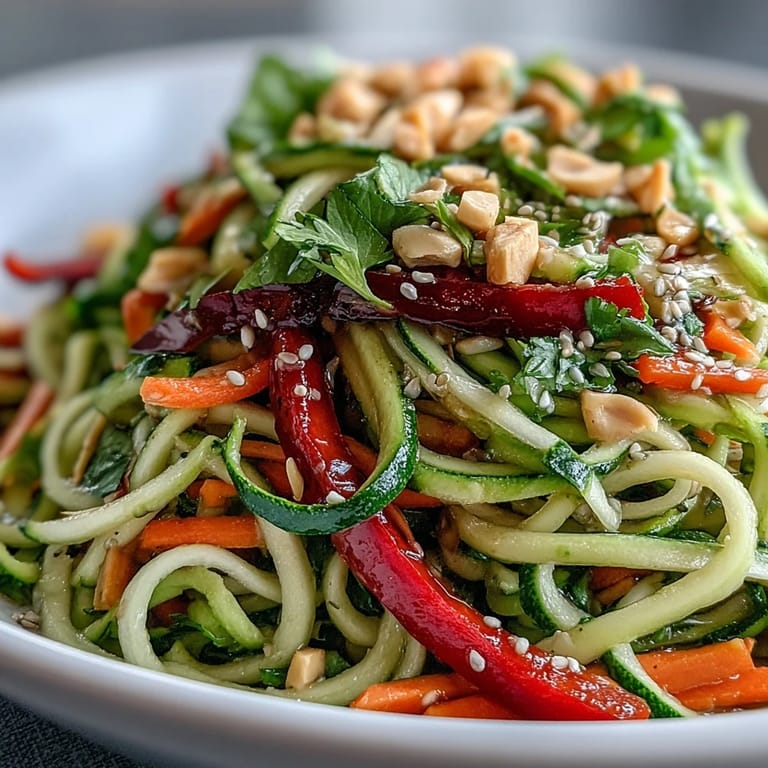
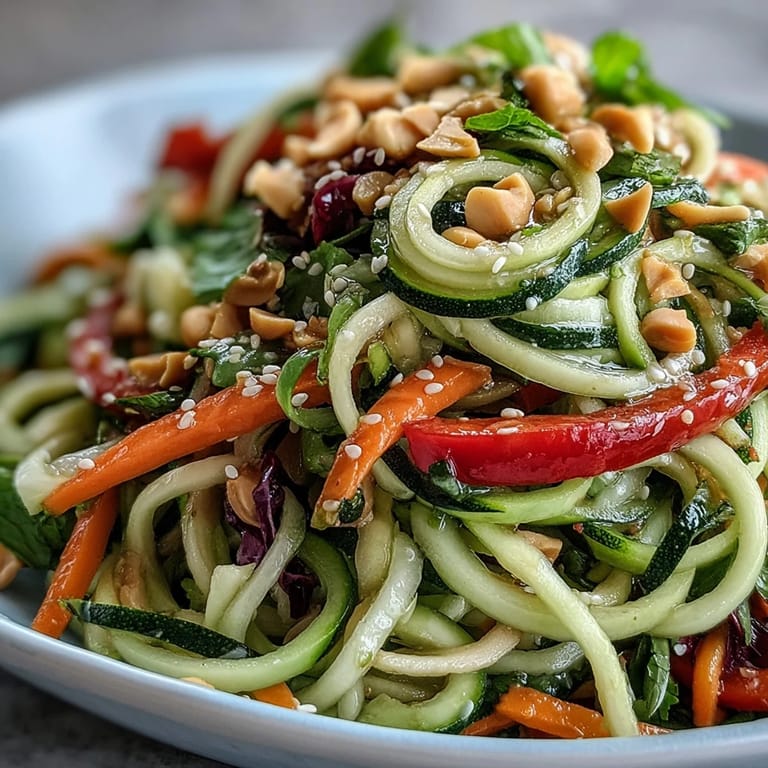
- Transfer to a serving platter, scatter sesame seeds and nuts across the top, and add extra cilantro if you're feeling generous. This is where the salad stops being functional and becomes beautiful.
 Save
Save There's something about watching someone who claims they don't eat salad come back for thirds of this bowl. Food stops being just nutrition in moments like that—it becomes proof that sometimes the simplest combinations hit deeper than you planned.
The Dressing Makes Everything
I've learned that a good dressing isn't something you add to vegetables—it's the reason people eat them. The sesame-ginger combination here works because of balance: the nuttiness of sesame oil, the gentle bite of fresh ginger, the acidity of rice vinegar, and just enough sweetness to make you want another bite. Once you nail this ratio, you'll find yourself making it for everything from grilled vegetables to grain bowls to leftovers that suddenly need rescuing.
Make It Your Own
The beauty of this salad lives in flexibility. Daikon, yellow squash, or even beetroot spiralize beautifully and bring their own personality to the bowl. Roasted chickpeas, edamame, or baked tofu add protein without changing the light, refreshing nature of the dish. Some days I skip the nuts entirely and double down on sesame seeds; other times I add shredded carrots for extra crunch. The vegetables are the canvas, and the dressing is what makes it art.
Timing and Storage Wisdom
This salad is best served within a couple hours of dressing, but it stays delicious for a day in the refrigerator if you keep the components separate. I've learned to pack the dressing in a small container and toss it all together right before eating when I'm meal prepping. The sesame seeds and nuts stay crunchier if you sprinkle them on just before serving, but honestly, even slightly softened they taste like intention.
- Make the dressing up to three days ahead and store it in a sealed jar in the refrigerator.
- Spiralize vegetables the morning of serving for the best texture and freshest taste.
- If you're bringing this somewhere, pack the components separately and assemble on arrival for optimal crunch.
 Save
Save This salad has become my answer to the question of what to bring when I want people to feel taken care of but not overwhelmed. It's proof that the best meals don't require heat, complicated technique, or hours of time—just good ingredients, a balanced dressing, and the willingness to trust that simplicity sometimes hits harder than complexity.
Common Questions
- → Can I make this dish ahead of time?
Yes, you can prepare the vegetables and dressing separately up to 24 hours in advance. Store them in airtight containers in the refrigerator. Toss together just before serving to maintain the best texture and prevent the vegetables from becoming soggy.
- → What vegetables work best for spiralizing?
Zucchini, carrots, cucumbers, yellow squash, daikon radish, and beets spiralize beautifully. Firmer vegetables hold their shape well and provide satisfying crunch. Avoid vegetables with high water content like tomatoes or soft textures that won't hold the noodle shape.
- → How can I add more protein to this dish?
Baked tofu, edamame, grilled chicken strips, or steamed shrimp make excellent protein additions. You can also sprinkle hemp seeds or roasted nuts throughout. For plant-based options, try adding chickpeas or lentils for a more filling meal.
- → Is there a substitute for sesame oil?
If you have a sesame allergy, try using olive oil combined with a small amount of toasted sunflower seed oil for a similar nutty flavor. Grapeseed or avocado oil also work well as neutral bases, though the distinctive sesame flavor will be missing.
- → Can I cook the vegetables instead of serving them raw?
Absolutely! Lightly sauté the spiralized vegetables for 2-3 minutes if you prefer them warm and softened. This works especially well during colder months. Keep the cooking time brief to preserve the vegetable's nutrients and prevent them from becoming mushy.