 Save
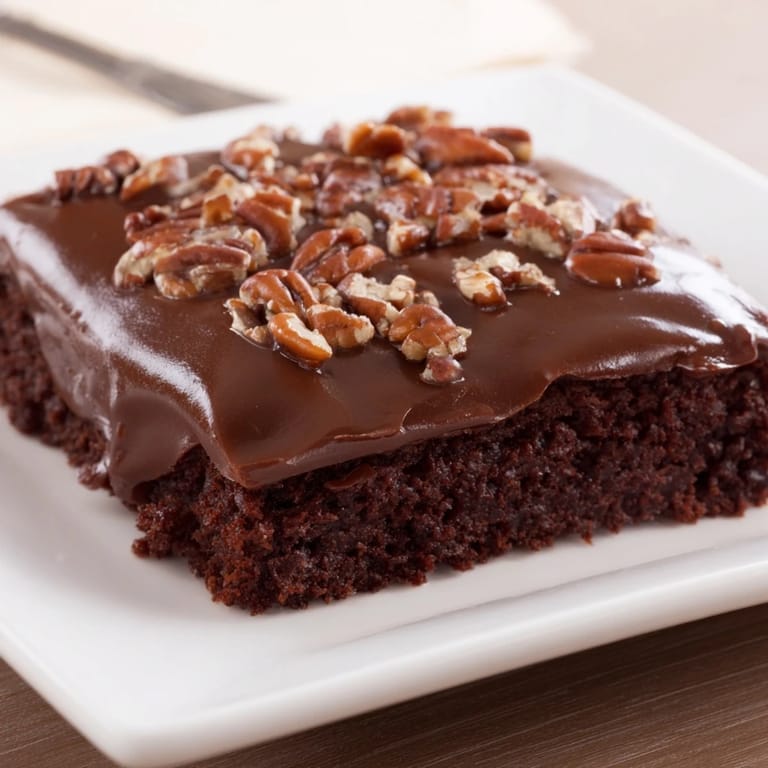
Save My grandmother pulled a sheet pan of this cake from her oven on a humid July afternoon, and the kitchen filled with a smell so rich it felt like chocolate itself had melted into the air. She'd learned this recipe from a church potluck decades ago, and watching her pour that fudgy icing over the hot cake while it was still steaming felt like witnessing pure kitchen magic. The way it settled into every crevice, creating this glossy, almost liquid layer of chocolate luxury, made me understand why Texans don't mess around with their sheet cakes. I've been chasing that exact moment ever since, and honestly, it's the closest thing I have to comfort in edible form.
I made this for a bake sale my daughter was running, and a woman bought two slices before the table was even fully set up. She came back twenty minutes later asking for the recipe, fork still in hand, slightly embarrassed but unapologetic. That moment taught me something about food—when it's done right, it doesn't need explanation or apology, just gratitude.
Ingredients
- All-purpose flour: Two cups gives you the structure without making the cake dense or heavy; I learned the hard way that cake flour makes it too tender here.
- Granulated sugar: Two cups might sound like a lot, but it dissolves into the moisture, creating that characteristic melt-in-your-mouth quality that defines the whole cake.
- Salt: Just half a teaspoon, but it's doing crucial work cutting through the chocolate and balancing the sweetness so it doesn't cloy.
- Baking soda: One teaspoon reacts with the sour cream and cocoa to create lift without needing eggs to do all the heavy work.
- Ground cinnamon: Half a teaspoon is optional, but I never skip it because that warm spice note underneath the chocolate hits differently.
- Unsalted butter: One cup for the cake batter and another half cup for the icing—it's what makes both components silky and luxurious.
- Water: One cup seems counterintuitive, but it carries the cocoa flavor and keeps everything moist without making it soggy.
- Unsweetened cocoa powder: A quarter cup in the batter plus another quarter cup in the icing means real chocolate flavor, not that dusty artificial taste.
- Eggs: Two large ones add richness and help bind everything; room temperature ones mix in more smoothly if you have time.
- Sour cream: Half a cup creates tang and moisture that regular milk can't achieve; don't substitute yogurt, it changes the texture.
- Vanilla extract: A teaspoon in the batter, another in the icing—it deepens the chocolate flavor and adds warmth.
- Powdered sugar: Three and a half cups for the icing, sifted so there are no little lumps hiding in your fudgy topping.
- Whole milk: A third of a cup in the icing keeps it pourable and luxurious, not thick and goopy.
- Pecans or walnuts: A cup chopped and optional, but they add texture and make people think you spent way more time on this than you did.
Tired of Takeout? 🥡
Get 10 meals you can make faster than delivery arrives. Seriously.
One email. No spam. Unsubscribe anytime.
Instructions
- Set your stage:
- Preheat to 350°F and prep a 13x18-inch rimmed baking sheet with butter and a light flour dusting so the cake releases cleanly when it's time. Having everything ready before you start mixing is the difference between feeling organized and feeling frantic.
- Build the dry foundation:
- Whisk together flour, sugar, salt, baking soda, and cinnamon in a large bowl, making sure nothing is clumped and everything feels evenly distributed. This is your base, and mixing it well prevents pockets of baking soda taste or uneven rising.
- Create the chocolate magic:
- In a saucepan, melt butter with water and cocoa powder over medium heat, stirring until it's smooth and just starts to bubble. The heat carries the cocoa flavor and warms everything so when you pour it into the dry mix, it wakes up all those flavors.
- Unite the mixture:
- Pour that hot chocolate mixture over your dry ingredients and stir until the batter is smooth and glossy, no streaks of flour hiding anywhere. You'll feel the transformation happening as the heat from the liquid brings everything together.
- Add the tender elements:
- Whisk eggs, sour cream, and vanilla in a separate bowl, then fold them into the batter until it's completely smooth and silky. This step creates the tender crumb that makes people ask for seconds before they've finished their first bite.
- Settle into the pan:
- Pour everything into your prepared sheet pan and smooth the top with a spatula so it bakes evenly. Don't stress over perfection here—once the icing goes on, nobody's looking at the cake surface anyway.
- Bake with patience:
- Slide it into the oven for 18 to 20 minutes until a toothpick in the center comes out clean with maybe one or two moist crumbs clinging to it. The cake should spring back slightly when you press the top gently, and your kitchen will smell like pure chocolate bliss.
- Prepare the icing while it bakes:
- In another saucepan, melt butter with cocoa powder and milk over medium heat, stirring until it's smooth and just starting to bubble around the edges. Timing here matters because you want it hot but not boiling when you whisk in the powdered sugar.
- Whisk in the sweetness:
- Remove from heat and whisk in sifted powdered sugar and vanilla until the icing is completely smooth, thick but still pourable, almost like liquid velvet. If you're adding nuts, stir them in now so they're evenly distributed throughout.
- The moment of truth:
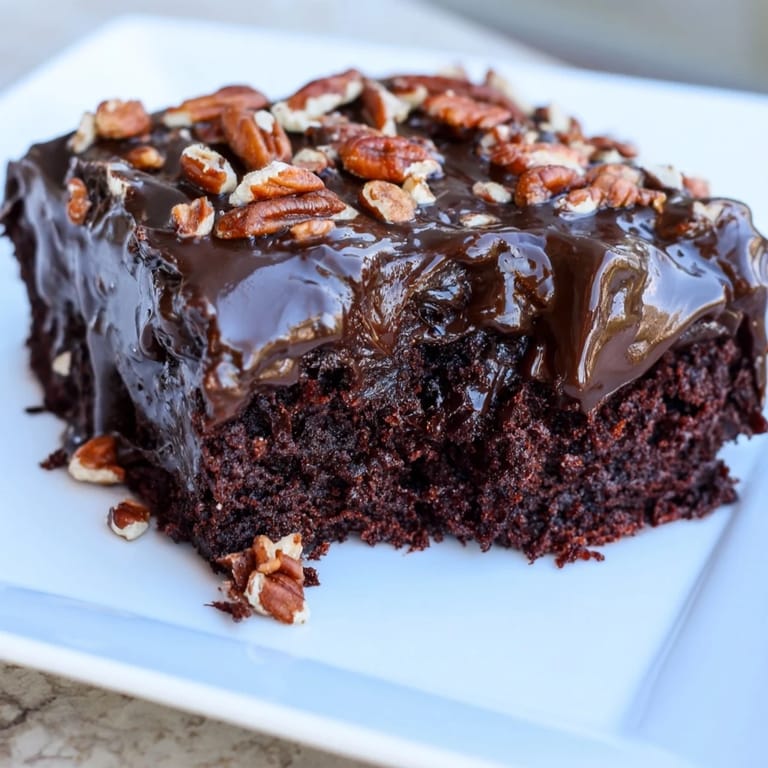
- Pour that warm icing over the hot cake the moment it comes out of the oven, working quickly with an offset spatula to spread it before it starts to set. Watch it settle and fill every crevice, creating that glossy fudgy layer that's the whole reason people make this cake.
- Let it rest:
- Leave it at room temperature until the icing sets completely, which usually takes an hour or so depending on your kitchen temperature. Cutting too early means you'll have icing on your knife and cake falling apart, so patience pays off here.
 Save
Save My neighbor once asked if I'd used a professional bakery's recipe because it looked too polished to be homemade, and I realized that's when a recipe stops being about impressing people and starts being about joy. This cake sits in that sweet spot where effort and payoff feel perfectly balanced.
Why This Works Every Single Time
The genius of Texas sheet cake is in its structure—the combination of baking soda, sour cream, and hot liquid creates a tender, almost indulgent crumb that absorbs moisture from the icing without becoming a soggy mess. The cocoa powder blooms when it hits that hot water, releasing flavors that wouldn't exist if you'd just mixed it cold. And the icing, poured while both cake and icing are hot, actually seeps into the surface of the warm cake, creating layers of flavor instead of just a topping.
Serving and Storage Wisdom
This cake tastes better after it's sat for a few hours because the flavors settle and the icing sets into a perfect fudgy state that's neither too soft nor too hard. It keeps beautifully wrapped at room temperature for three days, and honestly tastes just as good on day three as it did fresh. Cold milk is the official beverage pairing, though coffee works if you're going that route.
Making It Your Own
I've made versions with a pinch of espresso powder stirred into the icing, and versions where I've added a hint of bourbon to the cake batter when I'm feeling fancy. The base is solid enough to handle experimentation, but it's also perfect on its own without apology or additions. The beauty is that it serves 16 people, so you can bake it for a crowd or keep it for yourself and enjoy a small piece every day until it's gone.
- For a Texan twist that feels authentic, add a tiny pinch of cayenne to the icing—just enough to make people wonder what's making them come back for another bite.
- If you're out of sour cream, you can use Greek yogurt in a pinch, but it won't be quite as moist because Greek yogurt is thicker and less tangy.
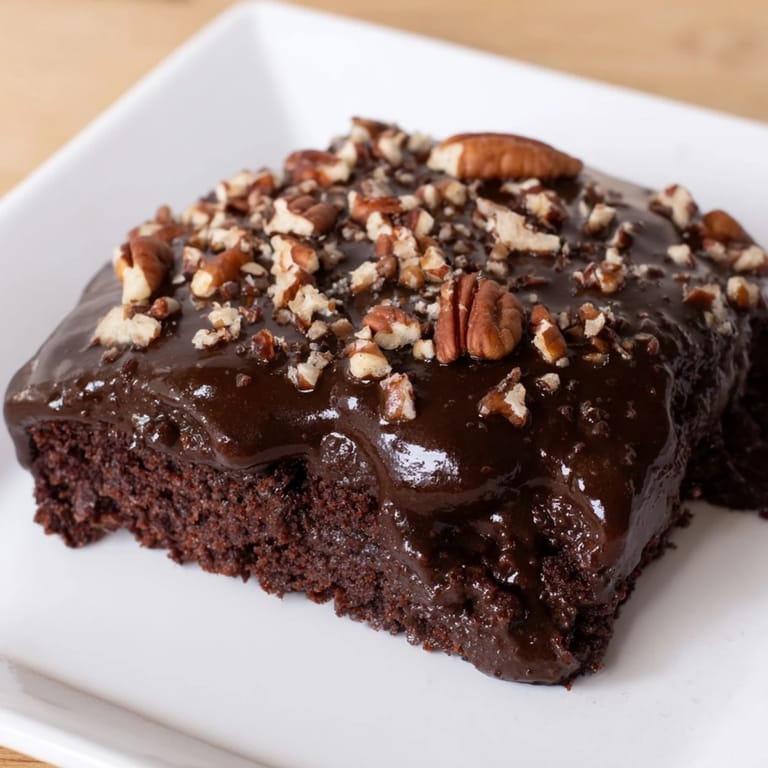
- Some people add chopped pecans to the icing, others add them as a sprinkle over the top before it sets, and some skip them entirely—all three approaches are equally valid.
 Save
Save This cake has shown up at church potlucks, school fundraisers, and countless kitchen tables where people needed something that felt like love in dessert form. It's the kind of recipe that becomes part of your life, the one you make without thinking because you know exactly how it'll turn out.
Common Questions
- → What gives the cake its moist texture?
Using sour cream in the batter provides moisture and tenderness, resulting in an ultra-soft crumb.
- → Can I omit the nuts in the icing?
Yes, nuts are optional and can be excluded for a nut-free version without affecting the overall texture.
- → How is the icing so fudgy and glossy?
The icing is made by melting butter, cocoa, and milk together, then whisking in powdered sugar and vanilla while warm for a glossy finish.
- → Why pour the icing while the cake is hot?
Pouring warm icing over hot cake allows it to soak in slightly, creating a rich, melt-in-the-mouth texture.
- → Can cinnamon be added to the cake or icing?
Yes, a pinch of cinnamon in the batter or icing adds a subtle Texan twist and warm spice note.