 Save
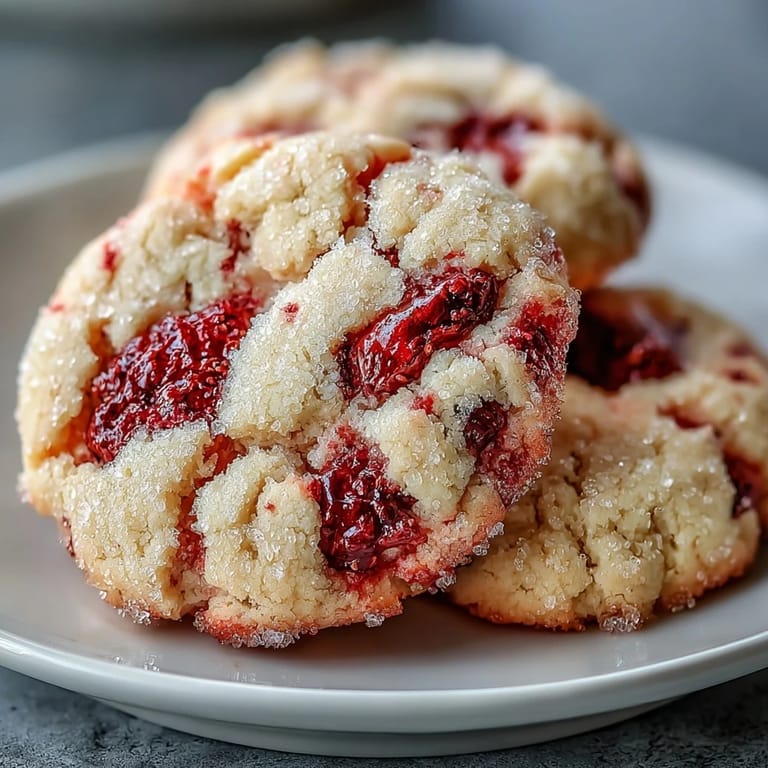
Save Last summer, my neighbor dropped off a basket of raspberries from her garden, and I had no idea what to do with them beyond jam. That's when I started experimenting with folding them into sugar cookies, hoping the tartness would cut through all that sweetness. What emerged were these pillowy, chewy cookies with little bursts of berry in every bite—the kind that disappear faster than you can bake them. The sparkly sugar coating caught the light in a way that made them feel fancy without any fuss. Now I make them whenever I want something that feels both indulgent and bright.
I brought a batch to a book club once, and someone actually paused mid-sentence to ask what they were tasting. That's when I realized these weren't just cookies—they were a conversation starter, especially when someone bit into a pocket of tartness they weren't expecting. My friend Sarah kept reaching back to the plate even though she'd already had two, which is basically the highest compliment you can get.
Ingredients
- Unsalted butter, softened to room temperature (1 cup): Softening butter properly means it creams faster and incorporates air, which gives you that tender crumb—room temperature is key, not melted.
- Granulated sugar (¾ cup) and light brown sugar, packed (¾ cup): The combination of both sugars creates depth and ensures chewiness; brown sugar especially keeps them soft longer.
- Large eggs, room temperature (2) and vanilla extract (2 teaspoons): Eggs at room temperature mix more evenly and don't seize the butter, while vanilla deepens the flavor without being obvious.
- All-purpose flour (2 ¾ cups), cornstarch (2 tablespoons), baking powder (1 teaspoon), baking soda (½ teaspoon), and salt (½ teaspoon): Cornstarch is the secret weapon here—it reduces gluten development and guarantees a tender, almost cake-like texture.
- Fresh raspberries (1 cup), gently washed and patted dry: Drying them thoroughly prevents excess moisture in the dough, which would make cookies spread too thin; handle them like they're precious because they are.
- Granulated sugar (¼ cup) and crushed freeze-dried raspberries (2 tablespoons, optional): The freeze-dried version adds color and tang without the moisture of fresh berries, creating that gorgeous sparkly coating.
Tired of Takeout? 🥡
Get 10 meals you can make faster than delivery arrives. Seriously.
One email. No spam. Unsubscribe anytime.
Instructions
- Preheat and prepare:
- Get your oven to 350°F and line two baking sheets with parchment paper or silicone mats. This step takes a minute but saves you from scrambling later.
- Whisk the dry ingredients:
- In a medium bowl, combine flour, cornstarch, baking powder, baking soda, and salt, then set aside. Having everything ready makes the next steps feel smooth and controlled.
- Cream the butter and sugars:
- Beat softened butter with both sugars on medium speed for 3-4 minutes until the mixture is pale, fluffy, and noticeably lighter in color. You'll actually feel the change in texture as you mix—it should look almost whipped.
- Add eggs one at a time:
- Reduce speed to low and add each egg separately, making sure each one is fully incorporated before adding the next. This prevents the dough from looking curdled or broken.
- Mix in vanilla:
- Stir until the vanilla is evenly distributed throughout the wet mixture. The smell at this point is already irresistible.
- Combine wet and dry:
- Gradually add the flour mixture on low speed, mixing just until you don't see any white streaks anymore. Overmixing here will toughen the cookies, so stop as soon as everything is combined.
- Fold in fresh raspberries by hand:
- Use a rubber spatula and gently fold the raspberries in, being careful not to crush them into oblivion. Some light crushing is fine—you actually want some texture.
- Make the coating:
- Mix granulated sugar with crushed freeze-dried raspberries in a small bowl. If you skip the freeze-dried version, the cookies are still wonderful—this just adds visual pop and extra tartness.
- Scoop and roll:
- Using a 1.5-tablespoon cookie scoop, portion the dough and roll each ball between your palms until smooth, then coat generously in the sugar mixture. The warmth of your hands helps the coating stick better.
- Space and bake:
- Place dough balls about 2 inches apart on your prepared baking sheets and slide them into the oven for 10-12 minutes. You're looking for edges that are set and centers that still look slightly underbaked—this is where the chewiness comes from.
- Rest and cool:
- Let cookies rest on the baking sheet for 5 minutes before moving them to a wire rack. This resting period lets them firm up just enough to handle without breaking apart.
 Save
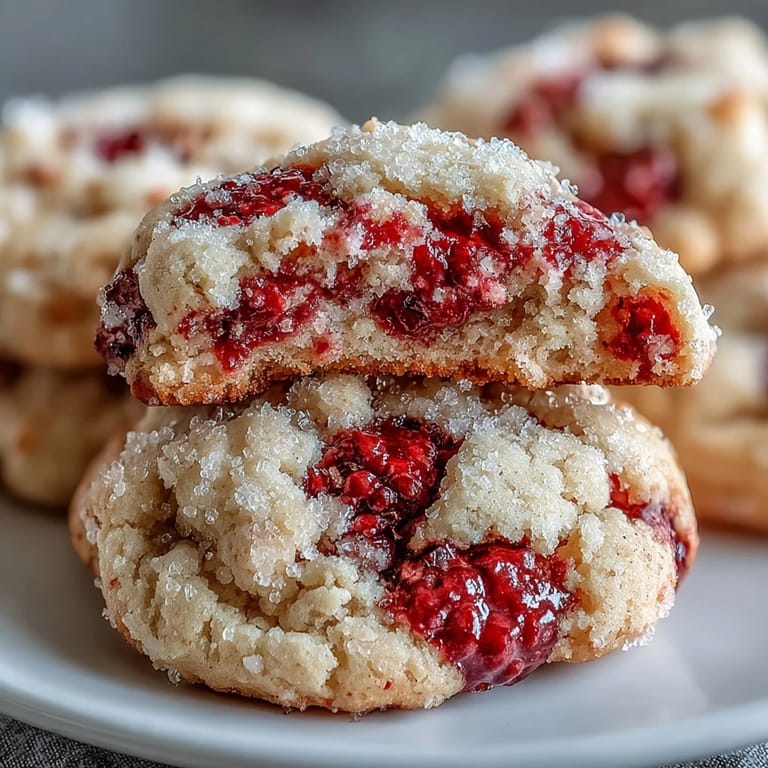
Save The moment I realized these cookies were special was when my three-year-old nephew bit into one and immediately looked confused, then delighted—like he'd discovered something entirely new. That look of discovering tartness mixed with sweetness, the crunch of sugar followed by soft dough, it made the whole process feel worth it.
The Cornstarch Advantage
When I first made these without cornstarch, the cookies came out more like traditional butter cookies—crumbly and delicate in the wrong way. Adding cornstarch was like flipping a switch; suddenly they had that signature tender-chewy quality that makes people go back for more. It sounds like a small thing, but that tablespoon or two changes everything about the eating experience.
Making Them Ahead and Storage
I've found that chilling the dough for 30 minutes before baking helps the cookies hold their shape better and actually deepens the vanilla flavor. The dough keeps in the fridge for about three days, and you can bake off batches whenever you want fresh cookies without the full-from-scratch feeling. If you're thinking ahead, you can also freeze unbaked dough balls for up to three months.
Flavor Variations and Customizations
Once you nail the base recipe, it's fun to play around with little additions. A teaspoon of raspberry jam swirled into the center of each dough ball before rolling in sugar creates pockets of extra tartness, and some people love adding a tiny pinch of lemon zest for brightness. The beauty of these cookies is they're forgiving enough to experiment with.
- Try 1 tablespoon of freeze-dried raspberry powder mixed into the sugar coating for an even more intense flavor and color.
- A touch of almond extract (like ⅛ teaspoon) in the dough pairs beautifully with raspberry without overpowering it.
- If fresh raspberries aren't available, use the freeze-dried version throughout—they're actually more stable and still deliver that real berry taste.
 Save
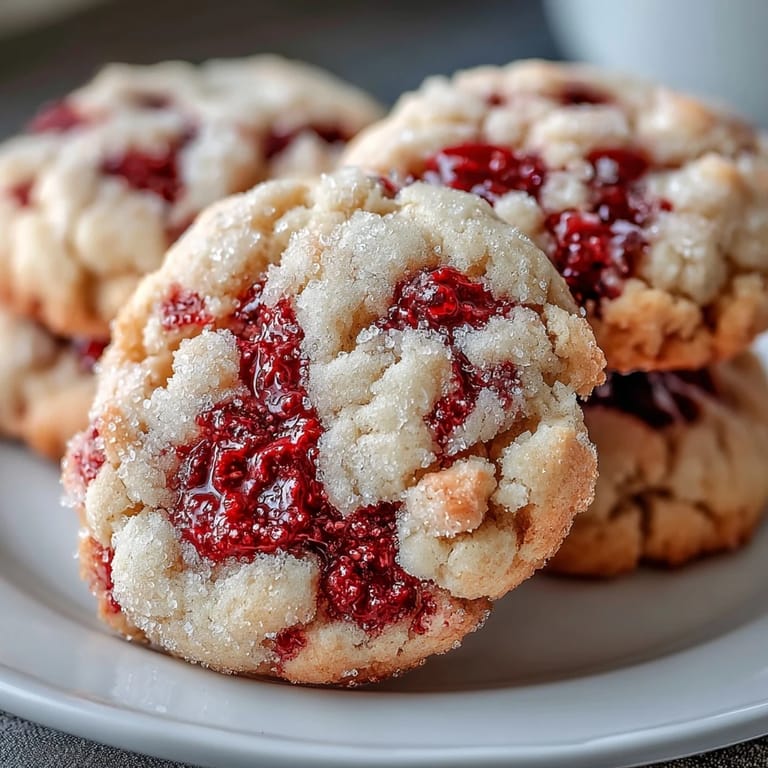
Save These cookies have become my go-to when I want to feel like I've made something special without spending all afternoon in the kitchen. There's something magical about fresh raspberries transformed into something this good.
Common Questions
- → Can I use frozen raspberries instead of fresh?
Fresh raspberries work best to avoid excess moisture. If using frozen, thaw completely and pat dry thoroughly before folding into the dough to prevent soggy cookies.
- → Why should I chill the dough before baking?
Chilling for 30 minutes helps cookies maintain their shape during baking, enhances flavor development, and prevents excessive spreading in the oven.
- → How do I know when the cookies are done?
Bake for 10-12 minutes until edges are set and centers look slightly underbaked. They'll continue cooking on the hot baking sheet during the 5-minute rest period.
- → Can I make these without freeze-dried raspberries?
Absolutely. The freeze-dried raspberry coating is optional. Simply roll the dough balls in granulated sugar alone for a classic sparkling sugar finish.
- → How should I store these cookies?
Keep in an airtight container at room temperature for up to 4 days. For longer storage, freeze unbaked dough balls or baked cookies for up to 3 months.