 Save
Save One Wednesday afternoon, I was standing in my kitchen trying to figure out what to do with a half-empty bag of black lentils when my neighbor stopped by with an armful of zucchini from her garden. She mentioned how she'd been making simple roasted vegetable salads all summer, and something about the way she described them—crispy edges, warm lentils, bright lemon—made me want to try combining them. That evening, I threw together what would become my go-to lunch for the next month, a salad so satisfying it didn't need much else to feel like a real meal.
I brought this salad to a potluck last spring, and someone asked if I'd bought it from a restaurant because they couldn't believe I'd made it at home. That compliment stuck with me—not because the salad is complicated, but because it proves that simple ingredients treated with care can feel genuinely special. Since then, I've made it dozens of times, sometimes with feta, sometimes without, always with the same quiet confidence that it's going to turn out.
Ingredients
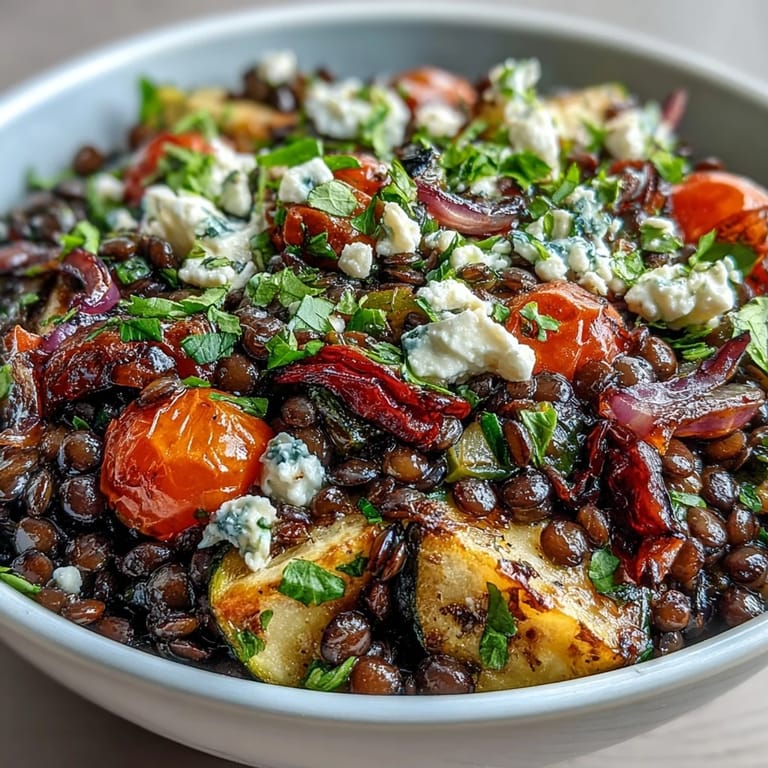
- Black lentils (beluga lentils): These smaller cousins of the brown lentil hold their shape beautifully when cooked, which is exactly why they're worth seeking out for a salad like this instead of using whatever lentil you have on hand.
- Water and bay leaf: The bay leaf adds a subtle earthiness while simmering, and using water instead of broth keeps the flavor clean so the vegetables can shine.
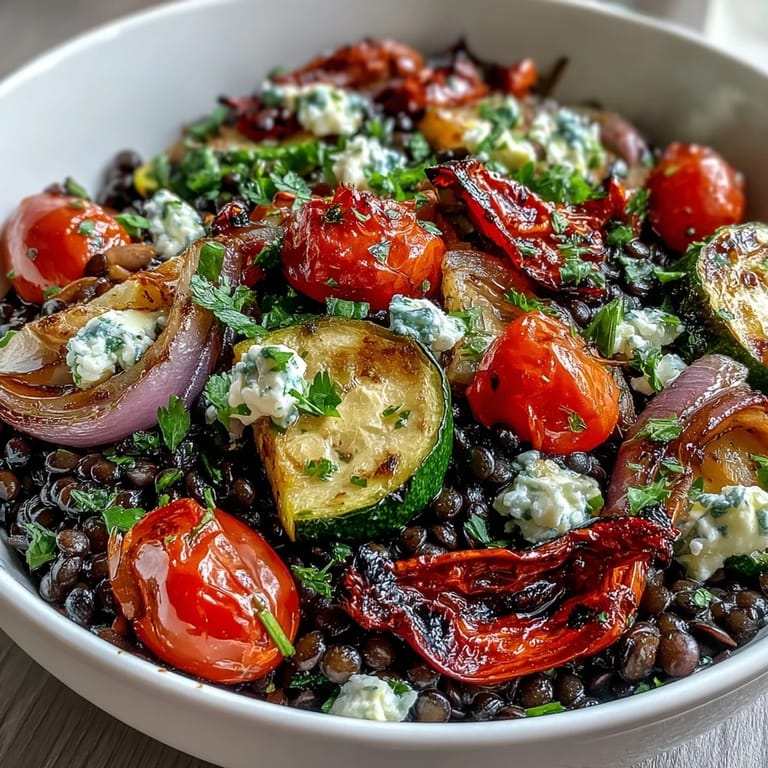
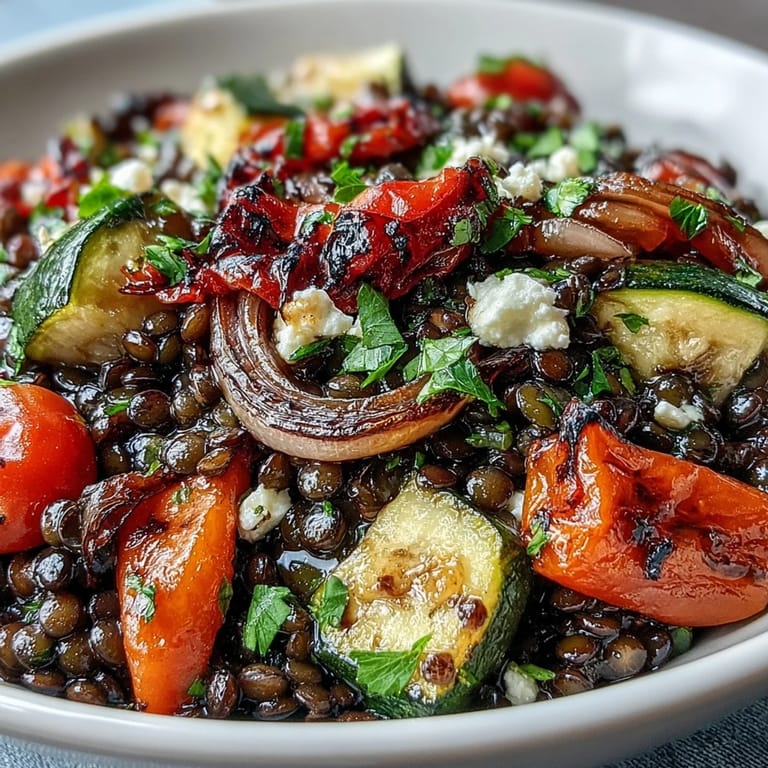
- Red bell pepper, zucchini, red onion, and carrot: The mix of textures and colors matters here—the sweetness of roasted carrot balances the slight bitterness of zucchini skin, and red onion adds a gentle sharpness that ties everything together.
- Olive oil for roasting: Don't skimp here; good olive oil helps the vegetables caramelize and brown properly, creating those crispy edges that make roasted vegetables taste like something special.
- Cherry tomatoes and fresh parsley: These are added raw, so they bring brightness and freshness that cuts through the earthiness of the warm lentils and cooked vegetables.
- Feta cheese: Optional, but worth considering even if you're not usually a cheese person—it adds a tangy contrast that makes you notice every other flavor on your plate.
- Extra-virgin olive oil and fresh lemon juice: The dressing is where the magic lives; use real lemon juice here because bottled juice tastes thin and one-dimensional compared to what fresh juice can do.
- Dijon mustard, garlic, and honey: These three ingredients emulsify the dressing and add complexity without overwhelming the vegetables—the mustard sharpens things up, the garlic whispers in the background, and the honey rounds everything out.
Tired of Takeout? 🥡
Get 10 meals you can make faster than delivery arrives. Seriously.
One email. No spam. Unsubscribe anytime.
Instructions
- Heat your oven while you prep:
- Set it to 425°F (220°C) and let it come to temperature while you cut your vegetables into roughly equal-sized pieces—this matters because they'll cook at the same rate.
- Get the vegetables ready for roasting:
- Spread everything on a baking sheet, drizzle generously with olive oil, and season with salt and pepper before tossing to coat evenly. You want every piece to have a little oil on it, which is what creates those caramelized edges.
- Roast until the edges turn golden:
- After about 15 minutes, give everything a stir so it roasts evenly—this is important because the pieces that touch the pan will brown faster than the ones on top. You're looking for about 25 to 30 minutes total, until the vegetables are tender and the edges are starting to turn crispy and brown.
- Cook the lentils while the vegetables roast:
- Bring a saucepan of water with the bay leaf to a boil, add your rinsed lentils, then reduce the heat and let them simmer uncovered for about 20 to 25 minutes. The uncovered part is key because it lets you see when they're done—you want them tender enough to bite through but still holding their shape, not falling apart.
- Drain the lentils and season them while they're warm:
- This is the moment when they'll actually absorb salt and flavor instead of having it sit on the surface. Stir in the salt as soon as you drain them, and let them sit for a minute to absorb everything.
- Make the dressing in a small bowl:
- Whisk together the olive oil, lemon juice, mustard, minced garlic, and honey until the dressing is emulsified and thick enough to coat a spoon. Taste it and adjust the salt and pepper—you want it to taste bright and balanced, not too acidic or too mild.
- Combine everything while the lentils are still warm:
- Put the warm lentils and hot roasted vegetables in a large bowl, then add the raw tomatoes and parsley. Drizzle with dressing and toss gently, so you don't break apart the roasted vegetables—you want chunks, not pulp.
- Serve it however feels right:
- Some people like it warm straight away, some prefer waiting until it cools to room temperature, and some refrigerate it overnight and eat it cold. All of those versions are delicious.
 Save
Save There's a moment when you taste this salad for the first time that you realize how satisfying food can be when it's made without any pretense—just good vegetables, good lentils, and a dressing that makes you want to scrape the bowl. That's when it stops being a salad you make because it's healthy and starts being something you make because it makes you happy.
Why Black Lentils Are Worth the Hunt
Black lentils, also called beluga lentils because of how they look, are smaller and denser than brown lentils, which means they cook faster and hold their shape stubbornly. I learned this the hard way by using up whatever lentil I had in the pantry and watching them turn into mush halfway through cooking. The first time I used actual black lentils, the difference was immediate—they stayed whole, had a slightly peppery flavor, and made the whole salad feel more refined. Now I keep them stocked specifically for this reason, and I've never gone back.
The Secret to Roasted Vegetables That Actually Taste Good
Most people undercook roasted vegetables or don't oil them enough, which means they steam instead of roast. The real trick is using enough olive oil so every piece can make contact with the hot pan, and then not stirring them too often—let them sit there for at least 12 to 15 minutes before you give them a stir, so they have time to develop those crispy, caramelized edges. When you do stir them halfway through, you're just redistributing them so the pieces that were on top go to the bottom and get their turn on the hot pan. It sounds simple, but it's the difference between roasted vegetables and sad, cooked vegetables.
Making This Salad Work for Your Life
This recipe is flexible enough that you can customize it based on what's in your kitchen or what you're in the mood for, which is part of why it's become such a reliable weeknight dinner. The core is the warm lentils and roasted vegetables, and everything else can shift around depending on the season or what you have on hand. I've made it with spinach mixed in, with cucumber instead of zucchini, with sunflower seeds instead of feta, and it always works because the foundation is solid.
- If you want to add greens, toss in a handful of arugula or baby spinach at the very end so they stay fresh and bright.
- For more protein, top it with grilled chicken, a poached egg, or salmon—the lemon dressing plays beautifully with any of those.
- Keep the dressing separate if you're meal-prepping so the salad doesn't get waterlogged by Wednesday.
 Save
Save This salad has become one of those recipes I reach for when I want something that feels nourishing without being fussy, that tastes intentional without requiring restaurant-level skill. It's proof that sometimes the best meals are the ones that let good ingredients speak for themselves.
Common Questions
- → What makes black lentils different from other varieties?
Black beluga lentils hold their shape exceptionally well during cooking, developing a tender yet firm texture. They're smaller and more earthy than green or brown lentils, making them perfect for salads where you want distinct, protein-rich bites rather than mushy legumes.
- → Can I make this ahead of time?
Absolutely. This dish actually improves after a few hours as the lentils absorb the dressing. Store in an airtight container for up to 5 days. Add fresh parsley and feta just before serving to maintain texture and brightness.
- → What vegetables work best for roasting?
Root vegetables, bell peppers, zucchini, red onion, and carrots all roast beautifully. Choose veggies that caramelize well and maintain structure. Avoid delicate vegetables like tomatoes in the roasting phase—add those fresh at the end.
- → How do I know when lentils are perfectly cooked?
Taste test frequently after 20 minutes of simmering. Perfectly cooked lentils are tender throughout but still hold their shape. Avoid overcooking, which leads to mushiness. Remember they'll continue absorbing liquid as they cool.
- → Is this dish protein-rich enough for a main course?
With 11 grams of plant-based protein per serving, it's substantial as a standalone meal. For extra protein, add grilled chicken, salmon, or chickpeas. The fiber from lentils and vegetables keeps you satisfied for hours.
- → Can I use green or red lentils instead?
You can substitute, but texture will vary. Green lentils work well but take longer to cook. Red lentils break down more easily and create a creamier consistency. Black lentils are ideal here for maintaining distinct, elegant texture throughout.