 Save
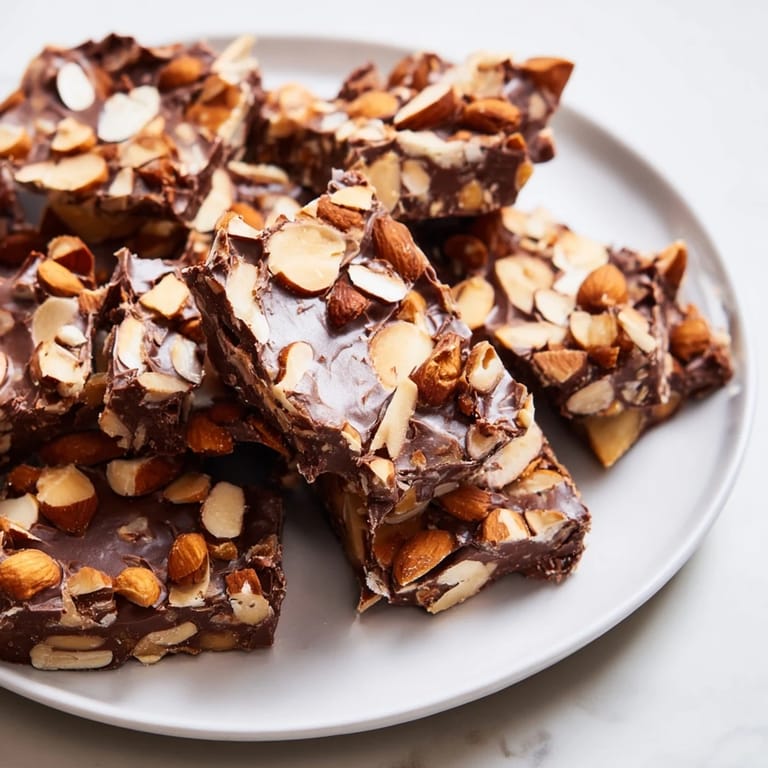
Save There's something about the smell of butter and sugar hitting that perfect golden stage that makes me pause everything else in the kitchen. My grandmother used to make English toffee every December, and I'd stand on a step stool watching the mixture transform from pale and soft to this deep amber liquid that seemed to glow. The first time I tried it myself, I panicked thinking it was burning, but that dark caramel color is exactly what you're after. Now whenever I make it, that moment when the vanilla hits the hot toffee brings me right back to her kitchen, except this time I'm the one holding the spoon.
I once brought a batch of this to a holiday potluck thinking it might get lost among all the other desserts, and somehow it was gone before the main course ended. My friend Sarah kept sneaking pieces, and by the end of the night she was asking for the recipe and a new batch for her office party. That's when I realized this wasn't just candy—it was something people genuinely reach for, break into uneven pieces, and eat without thinking.
Ingredients
- Unsalted butter (1 cup): Use quality butter here—it's the soul of this candy, so don't cut corners with low-fat spreads.
- Granulated sugar (1 cup): This and the butter create that deep caramel flavor, so measure carefully.
- Fine sea salt (1/4 tsp): Just a whisper of salt makes the sweetness pop without being noticeable.
- Water (2 tbsp): This helps the sugar dissolve evenly at the start so you avoid crystallization.
- Pure vanilla extract (1 tsp): Add this right at the end when heat stops the cooking—it brings a subtle warmth to the whole thing.
- Milk chocolate (200 g): Chopped or chips work equally well; chocolate melts faster if you chop it yourself into smaller pieces.
- Toasted sliced almonds (3/4 cup): Buy them already toasted if you can, or toast raw almonds for 8 minutes at 350°F until they smell incredible.
Tired of Takeout? 🥡
Get 10 meals you can make faster than delivery arrives. Seriously.
One email. No spam. Unsubscribe anytime.
Instructions
- Set up your stage:
- Line your baking pan with parchment paper so the toffee doesn't stick to the sides and you can actually remove it without heartbreak. Heavy-bottomed pans are non-negotiable here because thin pans create hot spots that burn the bottom while the top is still pale.
- Combine and melt:
- Throw butter, sugar, salt, and water into your heavy saucepan and turn the heat to medium. Stir constantly with a wooden spoon—you're looking for that moment when everything melts together into a smooth, combined mixture, usually 3 to 5 minutes.
- Cook to the magic temperature:
- Keep stirring frequently as the mixture begins to bubble and deepen in color. This is where your candy thermometer becomes your best friend—you're aiming for 300°F, which is the hard crack stage. This takes about 10 to 15 minutes, and it's the point where the toffee will snap cleanly instead of staying chewy.
- Finish strong:
- The second it hits 300°F, remove the pan from heat and stir in your vanilla extract quickly. Pour the hot toffee into your prepared pan immediately and spread it thin with a spatula—working fast here because it hardens quickly.
- Layer the chocolate:
- Wait just 2 minutes so the toffee sets slightly, then sprinkle your chocolate pieces evenly across the surface. Give it 2 more minutes for the residual heat to soften the chocolate, then gently spread it into an even layer with an offset spatula or the back of a spoon.
- Add the almonds:
- Scatter your toasted almonds over the still-soft chocolate and press them in gently so they stick. They'll add a subtle crunch that contrasts beautifully with the smooth chocolate and brittle toffee.
- Cool and set:
- Let everything cool completely at room temperature, which takes about 2 hours, or speed things up by refrigerating for 45 minutes. You'll know it's set when you tap it and hear a crisp snap instead of a soft thud.
- Break and store:
- Once fully set, break the toffee into uneven pieces with your hands—the irregular shapes actually make it feel more homemade and artisanal. Store in an airtight container in a cool place, and it'll stay fresh for about 2 weeks if you don't eat it all first.
 Save
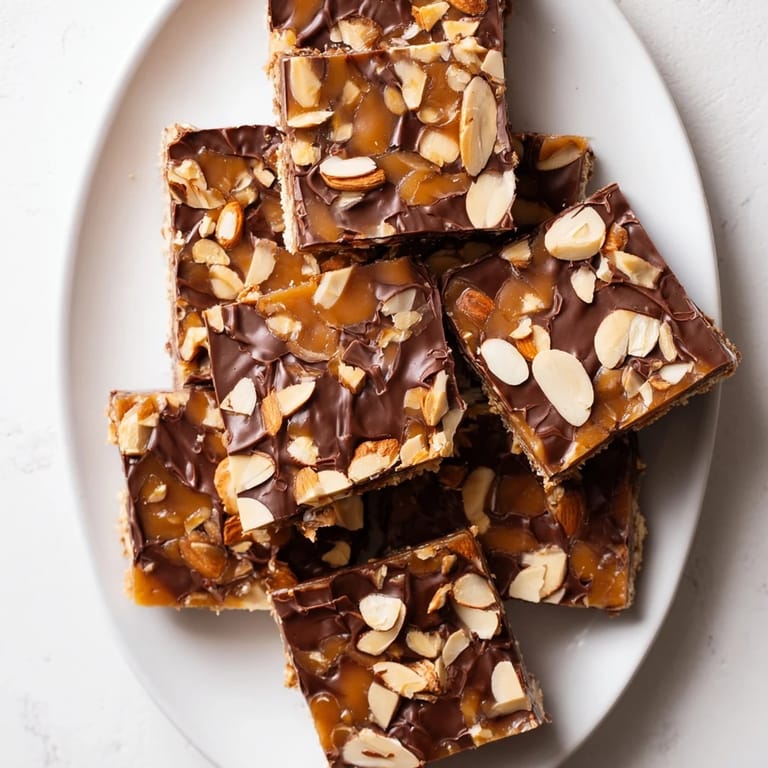
Save I remember my cousin biting into a piece of this toffee at Christmas and closing her eyes like she'd just heard her favorite song. She didn't say anything for a moment, just smiled, and that's when I understood that good food doesn't need to be complicated to make someone genuinely happy. This candy became the thing people asked me to make every year after that.
Why This Recipe Works
The combination of butter and sugar cooked to exactly 300°F creates a structure that's neither too hard to bite nor too soft to hold together. Most people don't realize that the temperature is more important than the time—you could take 8 minutes or 18 minutes depending on your stove's heat output, but 300°F is always the target. The vanilla added at the end adds depth without burning off, and the milk chocolate's slight sweetness balances the deep bitterness of the toffee beautifully.
Flavor Variations Worth Trying
Dark chocolate transforms this into something more elegant and less sweet, perfect for people who find milk chocolate cloying. Sea salt sprinkled on top before the chocolate sets creates a trendy sweet-and-salty contrast, or you could toast the almonds with a touch of cinnamon for warmth. I've even experimented with different nut combinations—cashews give a buttery quality, and hazelnuts add an almost chocolate-hazelnut vibe that feels indulgent.
Storage and Gifting Tips
This candy keeps surprisingly well in an airtight container and actually tastes better after a day or two when the flavors have settled. For gifting, break it into a pretty jar layered with parchment paper, or wrap individual pieces in wax paper for a more polished presentation. If humidity is high where you live, store it in the refrigerator to prevent the chocolate from blooming, and always let it come to room temperature before opening the container to avoid condensation.
- Pack it with a small note explaining that it should be stored in a cool, dry place since humidity is its only real enemy.
- Make it ahead of time—this candy actually improves if made 2 to 3 days before you need it.
- Double the recipe without changing the cooking time, just use a larger pan and stir a bit more carefully to ensure even browning.
 Save
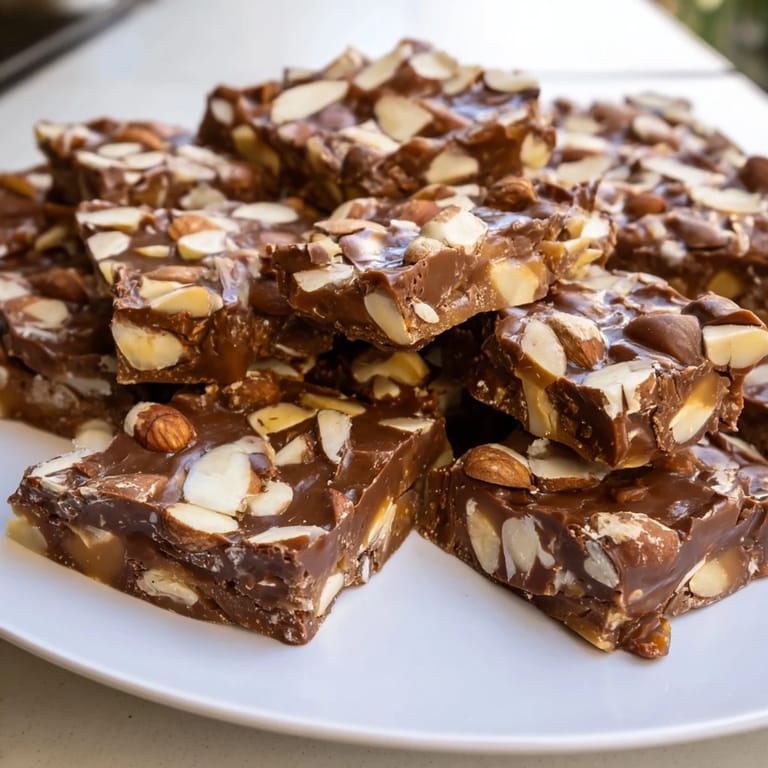
Save Homemade toffee is proof that sometimes the simplest ingredient lists create the most memorable results. There's something deeply satisfying about breaking a piece with your hands and hearing that crisp snap that tells you everything went right.
Common Questions
- → What is the ideal cooking temperature for the toffee base?
The toffee base should reach the hard crack stage, around 300°F (150°C), to ensure proper texture and crunch.
- → Can dark chocolate be used instead of milk chocolate?
Yes, dark chocolate can replace milk chocolate to provide a richer, slightly bitter flavor contrast to the buttery toffee.
- → How should the toffee be cooled for best results?
Allow the toffee to cool completely at room temperature for about 2 hours or refrigerate for a faster set to achieve a firm texture.
- → What can be used as a nut-free topping alternative?
For a nut-free option, omit the almonds or substitute with toasted seeds such as pumpkin or sunflower seeds.
- → How can stickiness be prevented when breaking the toffee?
Ensure the toffee is fully set and cooled before breaking into pieces; using parchment or silicone mats during preparation also helps prevent sticking.