 Save
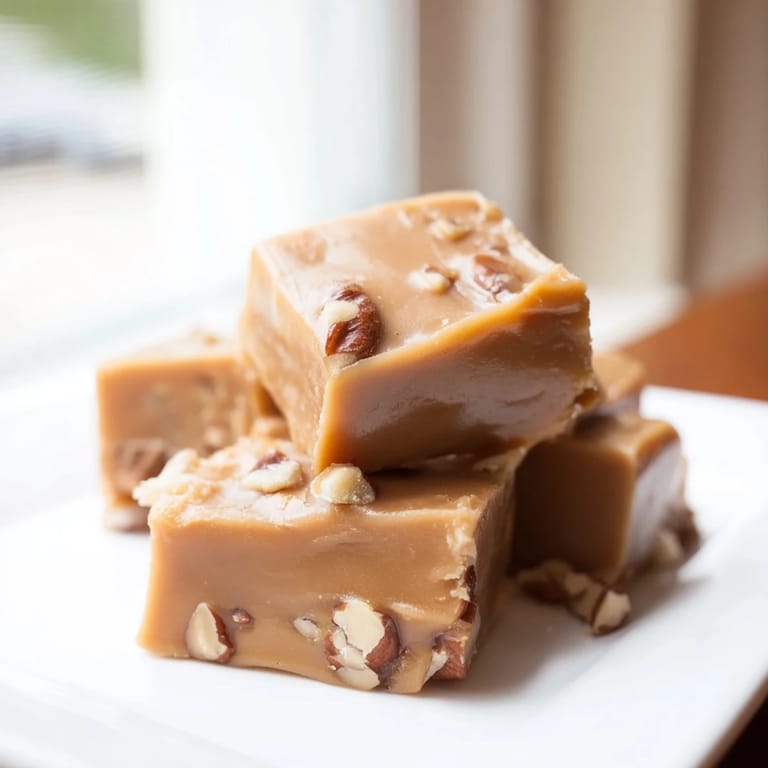
Save My grandmother kept a worn notebook filled with fudge recipes, each one annotated with tiny notes about what went wrong or unexpectedly right. Penuche was her favorite to make on quiet afternoons, the smell of caramelizing brown sugar filling the kitchen in a way that made everything feel special. I didn't understand why she insisted on using a candy thermometer until I watched her test that soft-ball stage for the first time, and suddenly the science behind that silky texture clicked. Now when I make it, I'm not just following steps—I'm recreating those moments when her kitchen was my favorite place in the world.
I made this for my coworker's birthday once, and she ate three pieces before asking what was in it. When I told her brown sugar, butter, and milk, she didn't believe me—she kept insisting there had to be something more complex. That moment taught me that sometimes the most impressive things are simple ingredients treated with respect and precision.
Ingredients
- Light brown sugar: This is the soul of penuche—packed light brown sugar (not dark) gives that deep caramel note without bitterness that darker varieties can bring.
- Granulated sugar: It helps achieve the right texture by balancing the moisture from the brown sugar and milk.
- Whole milk: Whole milk matters more than you'd think; it creates that creamy texture that makes penuche different from regular fudge.
- Unsalted butter: Cut it into cubes so it melts evenly and incorporates smoothly as the mixture heats.
- Fine sea salt: A small pinch awakens the brown sugar flavor and keeps it from being one-note sweet.
- Pure vanilla extract: Add it after cooking to preserve its flavor; it brightens everything without overpowering.
- Pecans or walnuts: Optional, but they add texture and turn this into something you can feel proud serving.
Tired of Takeout? 🥡
Get 10 meals you can make faster than delivery arrives. Seriously.
One email. No spam. Unsubscribe anytime.
Instructions
- Prepare your pan:
- Line an 8-inch square baking pan with parchment paper, leaving enough overhang to lift the finished fudge out easily. Lightly butter the paper so the fudge doesn't stick.
- Combine and heat:
- In a heavy-bottomed saucepan, add brown sugar, granulated sugar, milk, butter cubes, and salt. Stir over medium heat until the sugars dissolve and the mixture reaches a gentle boil—you'll hear it bubble and smell that wonderful caramel sweetness.
- Watch the thermometer:
- Clip a candy thermometer to the side of the pan and let it cook undisturbed until it reaches 238°F (soft-ball stage), about 10–12 minutes. Don't stir once it's boiling; let the heat do the work.
- Cool and rest:
- Remove from heat and let the mixture sit completely undisturbed for exactly 10 minutes. This cooling period is non-negotiable—it's when the magic happens chemically.
- Beat until thick:
- Add vanilla extract, then beat with a wooden spoon or electric mixer on low speed for 5–8 minutes until the mixture thickens, loses its glossy shine, and begins to hold its shape. You'll feel it transform from liquid to fudgy.
- Add texture:
- Fold in chopped nuts if using, being gentle so they stay suspended throughout the fudge.
- Pour and set:
- Immediately pour into the prepared pan and smooth the top with a spatula. Let it sit at room temperature for at least 1 hour until completely firm.
- Cut and serve:
- Lift the entire fudge block out using the parchment overhang, then cut into 1-inch squares with a sharp knife.
 Save
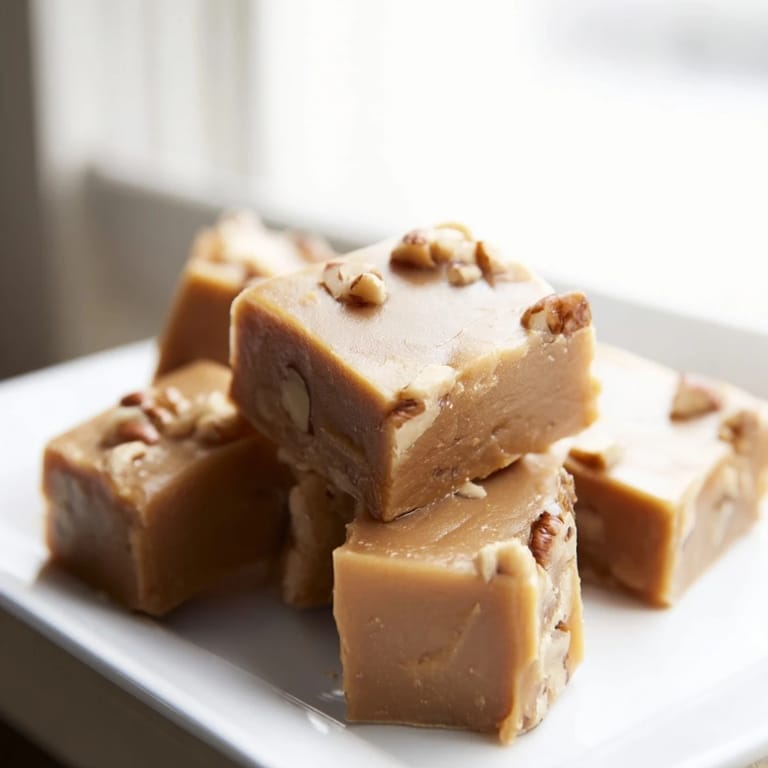
Save I remember my aunt bringing homemade penuche to every family dinner, wrapped in wax paper and tied with red ribbon. Everyone looked forward to it more than the main course, and she never told anyone her secret was patience and a candy thermometer.
The Brown Sugar Difference
Penuche gets its identity from brown sugar's molasses content—it's what separates it from chocolate fudge or vanilla fudge. Light brown sugar gives you that caramel sweetness without the heavier notes of dark brown. Once I understood this, I stopped treating all fudges as interchangeable and started appreciating what makes each one special.
When to Stop Beating
The hardest part isn't cooking—it's knowing when to stop beating the mixture. Too little and it stays soft; too much and you end up with something grainy and crumbly. You're looking for that moment when it's thick enough to hold its shape but still creamy when you scoop it into the pan. I learned this by ruining a batch, watching it set too hard, and realizing I'd overworked it.
Storage and Variations
Store your penuche in an airtight container at room temperature where it lasts up to a week, though it rarely makes it that long. The simple formula invites experimentation—a pinch of cinnamon brings warmth, maple extract adds complexity, or you can keep it pure and let the brown sugar shine. Here are some finishing touches that make a difference:
- Add a dash of maple extract for autumn vibes, or cinnamon for spiced-up richness.
- Try sea salt flakes sprinkled on top before it fully sets for a sweet-salty contrast.
- Make it nut-free by simply leaving out the pecans or walnuts without any other adjustments.
 Save
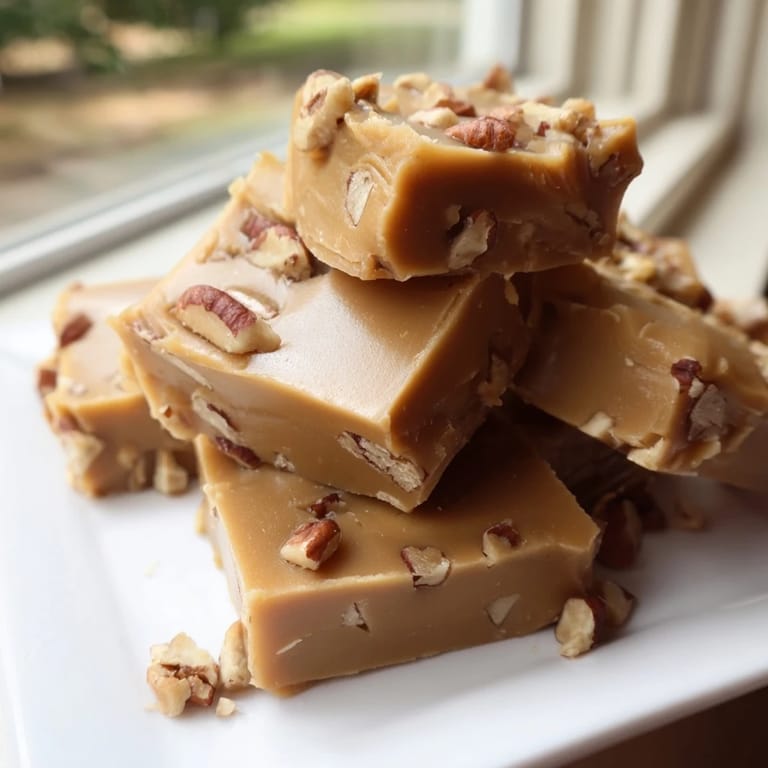
Save Penuche fudge is proof that the simplest ingredients, treated with respect and precision, become something extraordinary. Make it for people you care about, and watch their faces light up the same way mine did at my grandmother's table.